Showing posts with label movies. Show all posts
Friday, April 13, 2012
The Girlfriend Experience
I'm beginning to feel that I just don't get Steven Soderbergh unless he's in Hollywood mode. I watched his 2009 film, The Girlfriend Experience staring porn star Sasha Grey last night and thought it was dreadful. I was going to couch my feelings in less blunt terms, but I think I'm running a fever, so screw it.
I'm really not sure what Soderbergh is trying to say with this film. It is set (and was likely filmed) during the economic collapse in 2008 during the lead up the the Presidential election. There's a lot of anxiousness exhibited by boring finance guys. Sasha meets with web designers and whatnot to advance her business. She meets with a sleazy wannabe pimp who runs a review site for hookers and wants her to exchange her services for a positive review and for the chance to participate in a potentially lucrative trip to Dubai.
I'm very unclear about what the point is. The Dubai/website guy later publishes a scathing review of her services and she cries. The thing is, everything he says seems to be completely accurate. He paints her as being boring, affectless, uncultured and unsexy, which from everything we've seen, she is. I've never seen any of Sasha Grey's pornos, so I can't comment on what she's like to watch when she's actually having sex. Mostly because I'm essentially a colossal prude (as is, I think, Soderbergh - more on that in a bit). Maybe the movie has more meaning if one has seen her porn films, maybe there's some frisson I'm missing. Maybe I'm supposed to be comparing the awesomeness of Grey in the sack to the listlessness of everything we're seeing in this film. I don't know anything about Grey, and all I know about how I'm supposed to feel about her is from this movie and there's not anything there.
The older I get, the less enchanted I become with sweeping analogies. The interest for me in this young prostitute's business isn't so much in how it's just like the larger economy, but how it isn't. There's so much in this film about how the service Grey's character provides is more than, or other than sex. This is where it all falls apart for me. In order to demonstrate the essential emptiness of this world, Soderbergh shows Grey sitting and have boring, listless conversations with her clients. Yes, Grey is very pretty. But the world is full of pretty girls available to really rich guys at the amateur, semi-pro and professional levels. Back when I was a very young girl in NYC, I knew a few young women, who used to essentially live off of dating very rich men, semi-pro, Holly Golightly-style (let me be clear: not me. See above re: me being a colossal prude). They tended to be vivacious and fun to be around in addition to being really pretty. The pretty young girl market is super competitive in NYC, and Grey's character, not being a famous porn star, doesn't seem to be bringing that much to the table. Which brings me to the prudery problem.
Grey's character's business is sex. There's no sex in the movie. There could be an argument that the movie isn't about sex, it's about commerce. To which I cry bullshit. I think Soderbergh is trying to have it both ways. The titillation of stunt casting a porn star in his movie which elides the subject of sex entirely, while sort of dancing around it and pretending it's not the point. If it wasn't for the sex, none of these rich guys would be paying Miss Grey a dime. Period. There's a confusing sequence in the film in which Grey half falls in love with one of her clients. I say confusing because we never really see any interaction between them. Everyone in this film is an idea for a character standing in for an actual human being.
I kept thinking of Godard's film Vivre Sa Vie, which I rewatched recently. It's a spectacular film in which Anna Karina plays a young prostitute. It's one of my favorites, and is everything The Girlfriend Experience is not. It inhabits a world of people who actually exist, it contains events and surprise and spontaneity. In contrast, the control exhibited by Soderbergh in his verité-manqué strangles any possible life out of it.
It looks lovely. Sasha Gray is lovely. Her clothes are lovely. It's shot in a faux-verité style in a Manhattan that actually looks like street level Manhattan. I'm glad I watched it on our shiny new TV, because it's so pretty. It looks precisely like a fashion spread for Muse or Vogue Italia. High class call girl wears nice clothes and is beautifully photographed in a spurious documentary style and looks blank and/or sad. I've seen this before, after all, it's a huge cliché. I've never seen a movie before that reminded me of a mostly forgotten magazine spread.
Labels:
movies
Monday, June 20, 2011
A Dress, A Car, A Hat
I was raised Catholic and though not such a part of the modern church, saints reliquaries have always interested me. (side note: honestly, at this point, I'm not entirely sure what it's all about these days now that it no longer seems to rule Europe or commission great art or give the younger sons of nobility something to do with themselves)
Back to reliquaries. If you don't know, they are containers of objects, often pertaining to saints. Maybe a finger bone, maybe a cup, perhaps a bell, oftentimes a hunk of the true cross, occasionally a skull. These items were (and by some, are) deemed holy. But, they are mostly a remnant of a culture that has long turned to dust, and other objects are of far greater interest to the public.
Which brings me to the sale of Debbie Reynolds's movie memorabilia this past weekend. Oftentimes when such sales are announced, and I look at the list of pieces to be sold, there's usually one or two truly exciting things, and the rest is far more ordinary. But this sale was the move equivalent of opening up the storerooms of the Vatican and selling off all the high Renaissance masterpieces. Looking at the list of items it seemed as if all of movie history was being sold off at once.
We're a strange species with a bent for mysticism and talismans. The biggest news from the sale was that Marilyn's iconic subway dress sold for approximately 5 million dollars. Of course, there are soulless rich people who snatch things up for investment purposes, but the level of excitement the sale of these dresses and objects has caused feels like religion. These pieces engender an ache, a longing, and remind us of feelings that might be something akin to holiness, or at least love.
It's a big cynical world, so oftentimes lacking in joy. Old movies whose stars are mostly gone from this earth, need to be preserved. Something like 90% of silent movies are lost to us forever. But, on a more positive note, the wonders of the internet have brought old and seemingly forgotten movies and stars to more delighted people than since they were first released. There are entire Tumblrs devoted to Howard Lloyd. Teenagers happily rave over pictures of Gloria Swanson and Myrna Loy.
It's not just me, is it? Wouldn't having Chaplin's bowler in one's living room seem magical? And, yes. That was one of the items for sale. And, no. I wasn't the buyer.

Above left is a dress Claudette Colbert wore in Cecil B. deMille's Cleopatra.

Laurel and Hardy's Model-T Ford

Cagney's costumes from Yankee Doodle Dandy

Basil Rathbone's Sherlock Holmes coat (via Flickr)

Seemingly all the costumes from Singing in the Rain.
Also included: costumes from the 1938 Marie Antoinette, a 1922 Valentino matador costume, a box of jokes hand written by W.C. Fields, Planet of the Apes costumes, Elizabeth Taylor's costumes from Cleopatra and Raintree County, Mary Pickford's dress from Taming of the Shrew, Marilyn's "Little Rock" dress from Gentlemen prefer Blondes, the Santa suit from Miracle on 34th Street, an on and on and on. Sigh.
All photos unless otherwise noted are from wormholeriders.net
Saturday, June 18, 2011
Mermaids of New York
Mermaids of New York is a new short film making the rounds which features the legendary and lovely Bambi the Mermaid, Dame Darcy (who will have an entire post devoted all to her, soon!) and other glitterey, finned cohorts. See a clip, below, featuring Bambi:
Dame Darcy sings a sea chanty, of which she has an entire album, which you can purchase here:
As an added bonus, Dame Darcy's lovely illustration, "Dolls plunder and pillage the ship. Then drown the pretty sailor lad." From her book Dollerium which can be purchased (totally worth it) here.
Dame Darcy sings a sea chanty, of which she has an entire album, which you can purchase here:
As an added bonus, Dame Darcy's lovely illustration, "Dolls plunder and pillage the ship. Then drown the pretty sailor lad." From her book Dollerium which can be purchased (totally worth it) here.
Tuesday, June 14, 2011
The Cicada Princess
It's beginning to seem as if everyone and their cousin has a kickstarter campaign of some sort or another, but this one particularly caught my imagination. Maybe I'm just obsessed with insect themed animation.
The Cicada Princess is an animated short currently in production. Like so much of the work that seems to interest me these days, it is not digital. It's old fashioned, meticulous stop motion animation and sculpture. Based on the children's book of the same title, the images are both charming and haunting. See their video below. Find their kickstarter page here.
Sunday, June 12, 2011
Jasper Jaxon at Dixon Place and a Minor Ode To the Forgotten Pinup Girls of Yore
It's sometimes a sad old world, isn't it?Last month, 1959 Playboy Playmate (July if you're curious) and B-movie actress Yvette Vickers was found dead in her house by a neighbor. Now, don't get the wrong idea, there was no scandal per se, she died of heart failure at the age of 82 or so. The thing is, she's been dead for nearly a year the medical examiner said, as her body was actually mummified.
Which, in a startling segue, leads me to my inamorato (the man self-styled Trav S.D.) and his performance of The Ballad of Jasper Jaxon at Dixon Place. The performance was lovely, if I do say so. Jasper Jaxon is based on real life bank robber Elmer McCurdy, who upon his death in 1911 was over-embalmed and was displayed in various traveling side-shows and theater lobbies with various purposes until it was forgotten who this fellow had been or even that he was an actual mummified person and not just a prop. Like all great true American stories it is both tragic and hilarious.
Along with her Playmate of the Month fame, Miss Vickers had a pretty impressive monster movie career. She has the typical career of small roles in big pictures (her debut was in Sunset Boulevard!) and big roles in small pictures. Most well known for her role in Attack of the 50 Foot Woman, she worked in television through the 1970s and appeared in other B horror movies, including Attack of the Giant Leeches, whose wonderful poster you can see below.
The Ballad of Jasper Jaxon is a long, rambling and extremely catchy song in the style of Woody Guthrie with definite shades of Bob Dylan. There's a certain species of Americana that seems to have fallen out of favor recently in our glittery techno present, and it's an awful shame mostly. In general, a sense of history is slowly being eroded. The internet in some ways both helps and hinders. There's such wonderful access to nearly everything, but the ease of finding whatever piece of whatever what puzzle one comes across, also serves to flatten it somewhat. The screen with which we view everything can decontextualize nearly everything until it's all just floating in a digital present.Yvette Vickers cheerfully attended film festivals around the country in her old age. The fact that she could have disappeared for so long without anyone noticing breaks one's heart a little. The world is a lonely place for so many people, and one of my biggest fears, as it is for so many childless people, is that an end like that of Miss Vickers awaits us in the future. Both Yvette Vickers and the hapless crook Jasper Jaxon lived strange, picaresque and particularly American lives, only to wind up mummified, stuck in the parts of the newspapers designated for the weird and the uncanny, ready made to be turned, as all good American stories should be, into folk songs and B movies.
The Ballad of Jasper Jaxon will go on, no doubt and I will be sure to let you know of an recordings or return engagements.
Labels:
horror,
indietheater,
movies,
mummification,
music,
playboy,
RIP,
trav sd
Monday, June 6, 2011
Dixie Dugan: Show Girl In Hollywood
Oh, Alice White.The only reason she's re-entered the public's consiousness is because she is the subject of seemingly dozens of utterly charming publicity stills from the late '20s and through the '30s. I have a strong suspicion that the vast majority of those who are won over by her adorableness have never seen any of her pictures.
A few weeks ago we emerged from Cabinet Headquarters and ventured over to Film Forum where we were lucky enough to catch the rarely screened 1930 flick, Show Girl in Hollywood. As I mentioned in yesterday's post, I have a particular fondness for the early sound musicals. Show Girl, like all of them, is a backstage musical, this one based on J.P. McEvoy's novel of the same name, featuring his show girl creation, Dixie Dugan.
The novel was serialized in Liberty Magazine in 1929, and as in its comic strip spin-off, the chorus girl protagonist was modeled after that most problematic and interesting Ziegfeld alum, Miss Louise Brooks. See below:
A first, silent Dixie Dugan flick, titled simply "Show Girl" was made in 1928, also starring Alice White. Prints exist, but it's not available on either DVD or online, unfortunately. The real question is: why was Louise Brooks never even considered to play the part which was based on her? The ways of Hollywood were and are still inexplicable. Show Girl was made by First National and Brooks was signed to Paramount (though she had been loaned out to First National before), and the studio wanted to promote their own version of Clara Bow, Alice White. The picture didn't do that well (neither did Ziegfeld's stage version of 1929 starring Ruby Keeler with songs by Gershwin), but a sequel was made a couple of years later once sound was introduced.Back to Alice White. She is, inarguably, adorable. But she's not much of an actor. She mugs and is stilted. Her singing voice is dubbed and she's a barely adequate dancer. But, as mentioned previously, she's super adorable, a trait which has launched the career of many a starlet past and present. But, adorable does not a career make and Miss White's floundered as she became enmeshed in a tabloid sex scandal (also not uncommon among starlets past and present) and her career never recovered. One way in which she does differ from many starlets is that she was a girl with a college education who began her career working behind the camera. She was Erich Von Stroheim's script girl, but he eventually fired her. She then worked for Charlie Chaplin, who first put her in front of the camera, a goal I have a feeling she may have achieved via the Chaplin casting couch.
White made lots of silent comedies and then segued nicely into sound, but never really hit the big time. One can't help but wonder what the Dixie Dugan series would have been like had Louise Brooks (below right) starred. Alice White's gigantic peepers and baby-doll Brooklynese are charming enough, but Brooks had a great deal more force and charisma and was sexy as hell. And she was an actual Ziegfeld star, unlike Alice White who only performed on film.
This film itself is more interesting as historical curiosity than for its own merits. It's one of the only early talkies that shows the actual movie making process. In the film, Dixie befriends a fading silent screen star, played by Blanche Sweet, aging silent film star. Though, please mind, I use the phrase "aging" advisedly. Sweet's character is written and filmed as if she's on the verge of Norma Desmond-hood, but then she cries out with anguish, "I'm thirty-two years old!". In the screening I attended, this was not greeted by the audience with understanding and pity, but with great big gales of laughter.
As with Glorifying the American Girl, the last reel of Show Girl in Hollywood was shot in color, but in this instance all copies have been lost, and only black and white versions remain. Like in the Ziegfeld movie, there is s scene in which actual stars attend the premier of Dixie's movie. We are then treated to one of the strangest musical numbers I've ever seen (which is saying a lot, as I've seen some very strange musical numbers indeed). The song is called "Haywire" and in order to demonstrate "crazy" the filmmakers have chosen to include these bizarre dancing... figures. They look like homeless people possibly, or maybe the legendary Mole People who supposedly live below the streets of New York. It is so weird. You can see the whole sequence below:
All my caveats aside, I am beyond pleased to have gotten to see this curious picture on the big screen. And though one can't help but dream of a Brooks inhabited alternate reality version, it's a fascinating and entertaining curiosity.
Sunday, June 5, 2011
Glorifying The American Girl
Glorifying the American Girl, the 1929 film produced and supervised by Florenz Ziegfield himself, is about as close as any of us are going to get to seeing the Follies live. Which still, isn't very close.I love the very early talkie musicals from the late twenties and very early thirties, when they were just figuring out the medium which, because of that incredible genius Busby Berkeley, got figured out pretty quickly. They're all backstage show biz tales, and that goes triple for Glorifying the American Girl. It's tells a simple story, but it's far more realistic than the ones told in Gold Diggers of 1933 or 42nd Street.
Ziegfeld star Mary Eaton plays aspiring singer and dancer Gloria Hughes who, as the film begins, works as a singer in a department store. Now, let me explain this archaic mode of employment. Gloria works behind the counter of the sheet music department, and when a customer wants to hear what a song they are interested in purchasing sounds like, she sings it, accompanied on piano by her wholesome boyfriend, Buddy. The sheet music industry at the time was huge, and deserves a post of its own for sure.
Back to Gloria. While attending a company picnic at which the management has provided variety entertainment, she meets tap dancer Miller of the vaudeville act of "Miller & Moody". After seeing her dance, he asks Gloria to become his partner. She does and goes off on tour, her avaricious harpy of a stage mother in tow. It's a grueling tour of five a day shows and one night stands - quite realistic in other words. It soon becomes clear that Miller has cycled through many, many Moodys over the years, and that he is something of a hack. A nasty, greedy piece of work, who hates other's success with a passion and expects sexual favors from his dance partners. After havong been on the road a good long while, Gloria is spotted by a Ziegfeld scout and she and Miller return to New York.
One of the things we found most exciting about this film here at Cabinet headquarters was its New York location shooting. There's a long sequence in which the streets around Grand Central are seen from driver's eye view and it's pretty amazing. I'm also pretty sure The New Amsterdam is played by The New Amsterdam. Florenz Ziegfels was at the peak of his glory when this film was shot and it shows. There's a sequence in which a crowd of luminaries are announced as the enter the theatre, including: Mayor Jimmy Walker, Noah Beery, Texas Guinan, Paramount head Adolph Zukor, and Mr. Ziegfeld himself, accompanied by his wife, Billie Burke.
We then get to watch about half an hour of a Ziegfeld spectacle. We see a long (very, very long) Eddie Cantor comedy routine, a song sung by Rudy Vallee (who I will love forever for his hilarious turn in Palm Beach Story), and Helen Morgan boozily sings a torch song from atop her piano. Make no mistake: these were the some of biggest stars alive at the time this movie was made. And there are girls. Girls and girls and more girls, wearing some of the most extraordinary costumes, and dancing and gliding across some of the most magnificent sets ever created. The Follies was both wonderful and boring. It wasn't particularly hip at the time - there were jazzier, younger, sexier and faster reviews. The Follies was an American institution, and one critic likened it to an achievement more on par with Ford's, one of automation, something to be admired, but fundamentally unsexy. In other words, it was a great deal like the sort of shows we now find in Las Vegas.
The film was written by chorus girl expert, J.P McEvoy. He was a screenwriter, short story writer and the creator of Dixie Dugan, a comic strip based on the most legendary of all chorus girls, Miss Louise Brooks. He will be featured in a post later this week. Needless to say, he knew the lay of this starry eyed though hard-bitten land well, and it shows.
And what of our heroine, Gloria? She becomes a great Ziegfeld star, of course. And in one of my favorite plot twists ever - she doesn't get the boy. Being a star is awfully time consuming, and though she weeps, no doubt everyone will be happier as things turned out. And in real life, Mary Eaton was a great Ziegfeld star, and is thus completely believable once she fufills her destiny. When Glorifying the American Girl was originally released in 1929, much of the final reel was in color, extraordinarily enough. Sadly, the versions currently available are in black and white only, and some footage was snipped post-Code because of some mild Show Girl nudity. But, all hail YouTube! Much of the color footage still exists, some of which can be seen below. Hopefully one day it will be reintegrated with the film (Martin Scorcese, are you listening, Sir?)
And what of Mary Eaton, our chorus girl heroine? From a family of show biz siblings, she is most well known today for being the sister of fellow Ziegfeld girl Doris Eaton, who became the oldest living Ziegfeld Girl prior to her death last year at the age of 106. Doris is the subject of Lauren Redniss's amazing pictorial-graphic-collage-biography, Century Girl, which is an absolutely must have for anyone with an even passing interest in Ziegfeld, chorus girls, American social history, show business, or anything at all, really. Mary was one of those complete entertainment packages that proliferated at the beginning of the last century: she could act, do light comedy, sing, tap and dance en pointe. He career wained with the fall of variety and she succumbed, like so many other talented performers both before and after, to alcoholism. She died of liver failure in 1948.
If you would like to see more of the lovely Mary Eaton, she was also featured in the early Marx Brothers film, Cocoanuts.
Wednesday, June 1, 2011
Gilda Gray: Shimmy!

Gilda Gray was a vaudevillian, a chorus girl, a headliner in The Follies and at the Palace, and a movie star.Now, of course, she's pretty much forgotten. Doing all this research on these former chorus girls and silent movie stars, there's one thing I'm finding particularly telling: at least half are mentioned as being "possibly the model for Norma Desmond". I picture Hollywood in the fifties being filled with strange and lovely aging goddesses who still live on cigarettes and gin. In some ways Gilda was one of them, but at heart, she was a trouper.
Born in Poland in 1901 (or thereabouts: to paraphrase Angela Carter, the birthdate of actresses is often a movable feast), her parents were killed when she was an infant, but she was luckily adopted out of the orphanage by a couple who moved with her to Milwaukee when she was 9 or 10 (or thereabouts: see above). She began her career singing and dancing in local saloons. She married when still in her early teens, had a son, got divorced and went on the road. She danced what was called (and is still called) The Shimmy. People went wild for her.
She went by a variety of names until none other than the great Sophie Tucker suggested she use the name "Gilda" because of her golden blonde hair. This was in 1919. She did, and it stuck. Gilda Gray is a far better theatrical moniker than Marianna Winchalaska, the name she was born with. She was a success in vaudeville, which led her to be hired by Florenz Ziegfeld, and in the Follies, she truly became a star. In 1923 she headed to Hollywood where she was immediately successful. Her movies were huge hits and she made lots of money, and like most true show biz success stories of the age, she was a world class workaholic.
In 1929, she lost most of her accumulated fortune in the crash, and couldn't get much movie work as her thick Polish accent was not deemed talkie friendly. So, she went back to vaudeville, where she got a booking at The Palace in New York at $3,500 a week in depression dollars. She also made some movies in England, one of which, Piccadilly, has been recently restored. I watched it a few weeks ago, and - it's not very good. In general, the English silents are pretty deadly, and this one is no exception. It's painfully slow-moving and Gilda isn't great in it. From what I gather, she was neither a great actress or a great dancer: what people came in droves to see was a pretty young woman shaking with orgasmic delight in an otherwise fairly staid world.
She had a heart attack in 1931, largely brought on by overwork. Any sort of comeback was hindered by poor health. She shot a few scenes, playing herself in The Great Ziegfeld in 1936, but her scenes were cut from the final film. She continued to perform in nightclubs when she could, got married and divorced a few times, and did some very admirable work during the war on behalf of Poland.
She died of a second heart attack in 1958, all but forgotten. The Motion Picture Relief Fund paid for her funeral.
Monday, May 30, 2011
Memorial Day
May everyone be enduring this muggy Memorial Day by ingesting hot dogs galore and cavorting in the surf.On this day I would like to salute the lovely and brilliant Carole Lombard. She died, tragically, at the age of 33 when her plane crashed after attending a rally in her home state of Indiana during which she raised over $2 million for the war effort.
Few movie stars are more missed. I have no doubt she would have segued seamlessly into daffy little old ladyhood.
photo via The Profane Angel
Friday, May 27, 2011
Never Say Goodbye Twice and Don't Go Against The Family!
No, I'm not getting all service-y again, spouting inexplicable advice via my posts.
The above heading contains the titles of two short films recently created and posted by friends of The Cabinet.
There's nothing I like better then pretend spies. I've watched every James Bond movie and all five Alias seasons (and some of those later ones were completely inexcusable). So, I of course watched the following with the utmost glee. Directed by Doug MacKrell as a part of the 48 Hour Guerilla Film Competition. Please watch it and send it to everybody, as they are intent on winning the competition, and that means hits. You will not be remotely disappointed.
Don't Go Against The Family is a hilarious short about a mob performance review by Josephine Cashman and Ken Simon:
Wednesday, May 25, 2011
Happy National Tap Dancing Day!
Today is National Tap Dancing Day, made so in honor of Bill "Bojangles" Robinson's birthday. In The Cabinet's humble opinion the following is the greatest of all tap dancing sequences ever filmed. The Nicholas Brothers and Cab Calloway in five minutes of perfection:
I know I've posted this before, but this might be a close second (and my favorite). Here is the Moses Supposes number from Singin in the Rain. The Intellectual Property Gods have disabled embedding, so you'll have to click though and watch on YouTube. Gene Kelly had so many balletic pretensions, but for my money he was at his best when he just, you know, danced. I love Cyd Charisse, and think she's just lovely, but I'd far rather see Kelly and Fred Astaire dance with a hoofer, you know?
And now, finally, in honor of the man himself, Bill "Bojangles" Robinson's famous stair dance:
I know I've posted this before, but this might be a close second (and my favorite). Here is the Moses Supposes number from Singin in the Rain. The Intellectual Property Gods have disabled embedding, so you'll have to click though and watch on YouTube. Gene Kelly had so many balletic pretensions, but for my money he was at his best when he just, you know, danced. I love Cyd Charisse, and think she's just lovely, but I'd far rather see Kelly and Fred Astaire dance with a hoofer, you know?
Speaking of which:
Swing Time is the film in which Fred dances his tribute to Bojangles (in the "Bojangles of Harlem" number) in which he sports, if not precisely blackface, something definitely akin to it. Which, I am sure, people have written dissertations on, as with most things, it's complicated. It's meant as a most sincere homage, but changing tastes and perceptions have made it somewhat cringe-worthy.
Dance in the form of tap (or otherwise) has nearly vanished form our screens. But, back in 1981, in Denis Potter's Pennies From Heaven, Christopher Walken danced to Let's Misbehave. This is a movie that had untold influence on me, and in some ways I've been ripping off the work of Denis Potter ever since. His strange and brilliant work for British television is simply unlike anything else. I believe everything you see that's interesting on television owes him something of a debt.
And now, finally, in honor of the man himself, Bill "Bojangles" Robinson's famous stair dance:
Tuesday, May 24, 2011
The Remarkable Animation of Ladislas Starevich
I don't remember what circuitous route brought me to the gobsmackingly great animation of Ladislas Starevich, but it hardly matters. I watched his 1912 animated short The Camerman's Revenge on YouTube and was simply blown away. I mean this was 1912! And it's just lovely. As the description on the YouTube posting so aptly puts it, "[it] is about infidelity among the insects, a topic which I dare say has never before or after been attempted on film." Mr. and Mrs. Beetle are dissatisfied with their bourgeoise marriage, so they both embark on affairs - he with a glamorous dragonfly who dances in a nightclub, she with a local artist. Well, just watch. I promise you, it's not like anything you've ever seen:
Starevich began as a naturalist - he had been made director of the Museum of Natural History in Kovno, Lithuania and his first films were live action documentary shorts about insect life. After directing a few films for the museum, he wished to feature insect behavior that was impossible to film, as the creatures were nocturnal and wouldn't behave normally under the lights. After seeing a short film by Emile Cohl, he decided to try stop action animation using insect carcasses. He soon branched into narrative shorts and moved to Moscow, where he created a series of animated shorts using dead animals which were acclaimed all over the world. Some people apparently couldn't believe they were animated and assumed the animals had been trained somehow - which sounds ridiculous to us, but imagine how magical his work must have seemed at the dawn of moviemaking.
You can see another of his charming insect films, The Dragonfly and The Ant, below:
After the September Revolution he joined the Russian expat community in Paris and worked there for the remainder of his life. He continued to make strange and creative animated movies until his death in 1965. Terry Gilliam has said he is a huge influence on his work.
Monday, May 23, 2011
Ladies and Gentlemen, The Fabulous Stains
Remember Night Flight? It aired on USA from 1981 through 1988 and they played videos and movies and stuff? Things that never wound up on MTV or most anywhere else really?I remember they played videos of lots of LA Punk and New Wave bands, but I mostly remember the movies. Breaking Glass, Rude Boy and some of the Paul Morrissey directed Warhol films. And best of all, Ladies and Gentlemen, The Fabulous Stains starring a barely turned fifteen Diane Lane. I think I watched it every time it aired which was fairly frequently as they didn't have too many movies in their rotation. But then it disappeared. I left home and more or less forgot about it.
Since it had aired so many times during my formative teenage years, I had no idea how obscure and hard to find it would prove to be over the subsequent decades. There were all sorts of problems behind the scenes, and it never received any sort of proper release. The screenplay was written by Nancy Dowd who won the Oscar for penning Coming Home a few years earlier. She subsequently removed her name from the project for reasons that remain obscure. There is apparently only one print of the movie in existence and for many, many years it was pretty much impossible to see.
No more! In this age of accessibility, one can now stream The Stains via Netflix. Which is precisely what we did here at Cabinet Headquarters recently, and I got the chance to watch it for the first time in over twenty years.
First things first: it holds up. Truly. Recently, I've been watching lots of movies from the 80s and early 90s and it really makes one realize how strange and/or sanitized American films have become. Diane Lane plays Corinne Burns, a young girl who lives alone with her younger sister as their mother has just died of cancer (at 38). The two girls and their cousin (played by an extremely young Laura Dern) have started a band. They live in a dying coal town in Western Pennsylvania, where there's nothing for them. In a subtle way, the film correlates growing up working class and disenfranchised in Middle America to growing up working class and disenfranchised in London. Punk speaks just as well to kids in either place.
The film starts with a news interview with Corinne as a local station reports on "The Town That Wouldn't Die". Really, the moment you say that about a town, you know it's dead as hell. Corinne spouts teenage nihilism at the camera, calling herself, "Third-Degree Burns". Lane is remarkable with her tough little face and her eyes so full of hurt and anger. She's doomed and she knows it, all she has left is her rage and teenage bravado. She's about to lose her apartment, she can't find a job, school is a non-starter, she doesn't get along with her aunt (Christine Lahti), when she goes to see whatever band is playing at the local club that night. As Corinne watches The Looters, a punk band from London play, she first looks as if she's been hit in the face with a plank, then a look of recognition and joy plays across her face as she realizes this is it. This is what she's been looking for her whole life.
The fictional Looters sound as realistic as any fictional punk band in the movies, probably because it's comprised of two Sex Pistols and a member of the Clash (Steve Jones, Paul Cook and Paul Simenon). They are on a depressing, low-rent tour opening for an aging Spinal Tap like band of dinosaurs (the lead singer is hilariously played by Fee Waybill of The Tubes). The Looters have been promised sunny California, but have wound up in Pennsylvania, Tennessee, Kentucky. The tour is being run by a Rasta named Lawnboy who meets Corinne, and having seen her on the news report asks them to join the tour. Despite her bandmate's understandable reluctance (they've had all of three rehearsals), she jumps at it. The Stains are born.
Their first performance is something of a fiasco, and Corinne's frightened bandmates leave the stage when they're laughed at (cut them some slack - they're like 14 years old). But then Corinne reveals the look she's invented for herself in all its proto-Riot Grrl glory: striped hair, red eye shadow, see-through red top and tights. She sneers at the audience: "I'm perfect, but no one in this town gets me. Because I don't put out." As the tour goes on she develops a tentative relationship with the lead singer of The Looters (played by a very young and hunky Ray Winstone), but she's emotionally cut off and made of pure aggression and ambition, so he doesn't really stand a chance. Corinne's ability to grab media attention is worthy of Madonna (who I bet watched this movie with great attention). A local reporter knows she's news and starts following the tour. As little girls across the heartland start worshipping her and dressing like her, Corinne becomes something of a monster. But she's a pretty glorious one.
This movie is amazing in the way it anticipates both Madonna and the Riot Grrls. Dowd clearly knew that something was in the air, that girls were waiting for something, that there was so little out there for them. There are also shades of The Go-Go's who began as an LA punk band, but sold millions of records when they started playing sparkly incandescent pop. The Runaways may have also been in her mind, as the ultimate proto-punk teen rock band. Corinne is a creature of pure resentment and anger and carries a gigantic chip on her shoulder that causes her to do some pretty unforgivable things (mostly to Winstone, who proves to be something of a romantic), but that doesn't mean what she says on stage or in interviews is wrong.
The media satire is dead on and I'm always a fan of movies where the girl doesn't get broken. Let the girl be a monster, or a jerk, that's fine - just please don't grind her into powder. Enough of that. Third Degree Burns tells girls: "Don't get had". And the movie, remarkably, doesn't punish her for it. Awesome.
Sunday, May 15, 2011
Sympathy For Lady Vengeance
Lady Vengeance stars Lee Young Ae as Lee Geum-ja, a woman who has been wrongly convicted of the murder of a child who seeks revenge on the real murderer, who has ruined her life, and the lives of the families of the children he has killed. The story is slowly pieced together through stunning and often hilarious imagery. We watch flashbacks to Geum-ja's time in jail as she garners a reputation for extreme kindness as she helps her fellow prisoners, gaining their trust and putting them in her debt as she poisons a brutal prison bully and even donates a kidney. Upon her release, she calls in the favors she is owed - she needs money, a place to stay, a job, weapons. She has dropped the sweet facade she manufactured and is a creature of pain bent on revenge. We see her dreams of revenge and they are shocking and surreal.
One can't help but compare Park's film to the Quentin Tarantino epic, Kill Bill, as they were filmed at about the same time. Both are about a young woman who is seeking bloody revenge on an older male authority figure and her search for a daughter she has never met. But where Tarantino's film (which I enjoyed) is nearly entirely a complex and magnificent exercise in genre, Park's is something much stranger. There's a nearly operatic sense of grief and loss in it, and where Tarantino's film ends with what must be called a happy ending as Uma Thurman happily drives into the sunset with her daughter, in Park's film there are no such simple endings. Geum-ja knows she's turned into a monster and her daughter has been adopted by an Australian couple who are the only family she knows.
Not to say that many of the pleasures of this film aren't ones dripping with a pop sensibility, because they are. But bubbling underneath it is terrible loss, a strange melancholy. It's lovely, really.
Tuesday, May 10, 2011
Yuriy Norshteyn: Glorious, Glorious Animation
I'm hoping one of my loyal readers who's knowledge of all things filmic and Russian far surpasses my own, will have some further information on Russian animation genius Yuriy Norshteyn (Fuzzy Bastard, I'm looking at you!).
And the unbelievably tragic My Green Crocodile. I'm not precisely sure what happens, as it is untranslated, but it's a simple story and I think I get the drift. The Green Crocodile falls in love with a beautiful cow. The other animals are jealous (I think) and it all ends in tears - which at least make flowers grow. It's stunning.
It is for work like this that I endlessly praise the internet. Such beauty, such genius - all at our fingertips, in our homes. It's not too easy, is it? I don't think so. With all this variety, most people still watch the same old corporate garbage to the exclusion of almost everything else. But there's so much to look at and listen to and to read and to watch. How could anyone ever be bored in this true age of wonders?
His work is detailed and beautiful and charming - and unprolific. He is referred to in Russia as "The Golden Snail" for the slowness of his process - he has been working on his (yet unfinished) film The Overcoat, based on the short story by Nicolai Gogol, since 1981. The work by him that is available (on YouTube - the only Region 1 DVD I could find is a long out of print anthology of Russian animation) is beautiful. Below see the magical, toy theater-like Seasons:
And the unbelievably tragic My Green Crocodile. I'm not precisely sure what happens, as it is untranslated, but it's a simple story and I think I get the drift. The Green Crocodile falls in love with a beautiful cow. The other animals are jealous (I think) and it all ends in tears - which at least make flowers grow. It's stunning.
It is for work like this that I endlessly praise the internet. Such beauty, such genius - all at our fingertips, in our homes. It's not too easy, is it? I don't think so. With all this variety, most people still watch the same old corporate garbage to the exclusion of almost everything else. But there's so much to look at and listen to and to read and to watch. How could anyone ever be bored in this true age of wonders?
Sunday, May 8, 2011
David Lynch Signature Cup Organic Coffee
Let's talk a little about coffee. I drink too much of it, but I love it, and I have never thought to myself, "What would coffee be like if David Lynch was responsible for making coffee?" And I never thought, "What would the commercial for this David Lynch made coffee be like?" and I never wondered "What would the commercial for the David Lynch made coffee be like if he turned the camera on a Barbie head for four and a half minutes?". I never wondered any of these things.
Well. Now I know.
via Coilhouse
Well. Now I know.
David Lynch Signature Cup Coffee from David Lynch on Vimeo.
via Coilhouse
Monday, May 2, 2011
Yet ANOTHER Fabulous Redhead turns 70: Ann-Margret Edition
I've always had a major soft spot for Ann-Margret and think she's been both under-rated and under-utilized. She's so lovely (and still is! Was I the only one who caught the Law & Order in which she played a nutty stalker?).Born in Sweden in 1941 (like every other fabulous redhead on Earth) and moved to the US when she was six. She catapulted to stardom in 1963 with her starring role in Bye-Bye Birdy. There was a great moment in the first season of Mad Men when they screened her opening number from the film and all the men found it sexy as hell, but Peggy found it to be embarrassing to watch. She has a point. Ann-Margret is trying so hard, it seems a bit - desperate. She was never a particularly relaxed performer.
I adore her in Viva Las Vegas in which she stars opposite Elvis, and for once (for both of them) it's an even match. They were simply the two sexiest people on the face of the Earth at that exact moment in time and they subsequently had a year long affair - about which she doesn't really speak. Subsequently, she married to actor/manager Roger Smith, a relationship that's lasted about 45 years. She is also one of the few performers who has the honor of being a Flintstone character!
But it's that sense of discomfort I wanted to write about a bit. I think she's a little hard to watch sometimes because she appears so eager to please. So many beautiful women on screen can just sit there and let the world bask in their loveliness. Not Ann-Margret. She always looks like she's working - I mean, look at the picture above. I find her scenes with Jack Nicholson in Carnal Knowledge to be almost unwatchable; he's so cruel to her. You can feel the desperation leaching out of her pores. I really hate that film, and it's one of those situations where my loathing is so intense I'm not sure if I trust it.
Ann-Margret has made a series of awful films in the last twenty years, not that actresses in her age range have a great deal of choice if they wish to keep working. She's an aging sex kitten, and that's exactly what she portrayed in her recent L&O turn. She was creepy and weird and histrionic and pretty riveting.
Saturday, April 23, 2011
Grave Encounters: TriBeCa Film Festival
Grave Encounters, which just had its premier at the TriBeCa Film Festival was directed by a team that has styled themselves "The Vicious Brothers". But, particularly in these days of torture porn and :::shudder::: human caterpillars, nothing about this film seemed particularly vicious. I think of that as a positive attribute.Do you enjoy those basic cable TV shows in which a group of (so-called) paranormal investigators wander around a hotel or an old Civil War barracks, and stand in empty rooms declaiming, "This is Dave. If there's anyone here, show me a sign. We don't want to hurt you." And they then spend the rest of the hour freaking themselves out and using all sorts of bullshit pseudo-science to prove the existence of hauntings?Yes? You enjoy these shows? Good! This review is written with you completely in mind. If you don't enjoy either horror movies or GhostTV, just carry on.
Grave Encounters, the movie, shows the (purportedly) REAL footage of the very last episode of Grave Encounters, the reality TV show. Let me restate: the CHILLING footage taken by the crew of Grave Encounters as they investigate the supposed paranormal occurrences which have long plagued the abandoned Collingwood Psychiatric Hospital.
BOO!
Were you scared?
No?
You're no fun. Let's continue.
The cast and crew of Grave Encounters lock themselves into the abandoned asylum overnight, and it's all filmed pseudo-verité style. One inevitably compares it to The Blair Witch Project, but as I loathed The Blair Witch Project this wasn't really a problem. The parody of a typical GhostTV episode at the beginning of the film was very funny and the film was reasonably enjoyable as more and more horrible ghostly manifestations plagued the Grave Encounters crew. It was fun to watch them begin to be frightened as their crass cynicism melts away in the face of actual ghosts.
My criticisms are mostly structural. Things go from vaguely disquieting to full out ghost attack far too quickly and too early in the film. It could really have benefitted from a more gradual build. Truly awful things started happening a little too early which doesn't leave the filmmakers anywhere to go. But, it was enjoyable to watch what was essentially an old fashioned ghost story play out.
About ten years ago a friend and I were working for an outdoor rock festival upstate - we were in charge of the dorms they had rented for the staff. They were using the Unification Theological Seminary (i.e. a Moonie Seminary) which is in a truly incredible Gothic Victorian structure that used to be a boy's school. It was really incredibly beautiful, with arched stone walkways with views of the Hudson River Valley, which at night were home to bats which would flap quietly around the columns. Our second night there, Upstate New York was hit with a terrible rain storm. As I took a much needed shower, the lights all suddenly went out. As night approached we realized we were trapped - without a car, without electricity and far from a cell phone tower, we had few choices. We communicated via Walkie Talkie as we guided the festival staff to where they would be sleeping. The night was long and terror filled.
But - we survived.
I don't know that the same could be said of the Grave Encounters crew. All that seemingly remains is this found footage.
Which, honestly, was a little over-conventional. This is one of those films where I would have loved to be able to sit down with the film-makers and help them structure it. Because this sort of story is all based on rising action and it flatlines way too early. But the ghosts and some of the Boo moments are really effective. There are some fun ideas, like when the crew wakes up to find they all have hospital patient bracelets on, and I like that the token female crew member isn't a horror babe, but a pretty normal girl. There's a lovely moment early on when one of the crew is on the phone to his wife, having a mundane conversation, and the wheelchair behind him moves just enough for us to notice, unseen by him, but caught by the camera. They are full of fun ideas, it just feels a little half baked and messy.
If Grave Encounters comes on Chiller one night, you'll have a perfectly enjoyable time watching it, even if it won't particularly change your life.
Thursday, April 21, 2011
Garbo Was a Silent Screen Goddess (Note: Silent)
In addition to the ridiculous number of films discussed here, we also watched, in our endless Cabinet viewing party, a couple of Greta Garbo films, namely: Mata Hari and Camille.Well, I fell asleep halfway through Camille.
To be honest, I've never really gotten Greta Garbo. She seems so mannered and her films are a little dull. But then I realized that she is a silent film actress, or maybe a supermodel. But a sound actress she is not. Talking diminishes her.
You look at her, and she's all cheekbones and mystery. And then she starts to talk and she becomes literal and the spell is broken. At right she wears that extraordinary ensemble by that genius Adrian. I could stare at her wearing it all day. But then some sort of prosaic dialogue happens and I'm less interested.
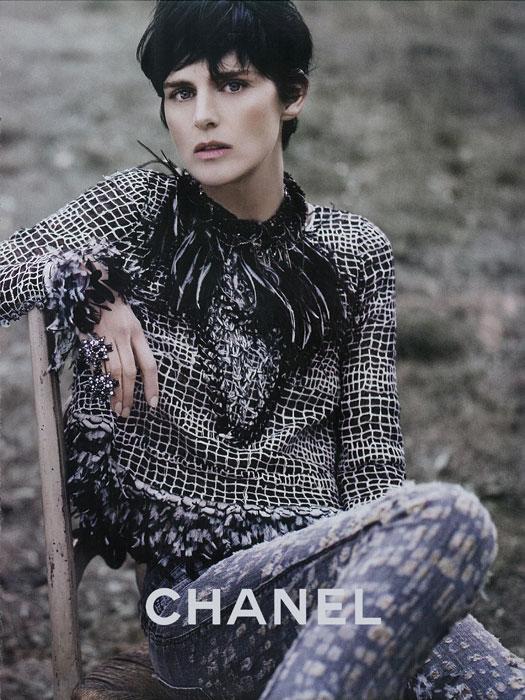
I can't think of anyone else, probably because the overlap between successful sound and silent performers was minimal. I think if I lump her in with Lisa Fonssagrives or Dovima or Stella Tennant I understand her a little better.
I mean, look at that face:
Monday, April 18, 2011
Why Bette Davis and Alice Faye Are No Scarlett O'Hara
The inamorato and I have been indulging in an orgy of movie watching of late. He's working on a play based on a 19th century stage sensation (I'm not sure if I'm supposed to spill or not), so his Netflix queue has been full of period films about women performers of one sort or another, and over all they've been mostly disappointing.There were two, In Old Chicago and Lillian Russell, starring the ludicrous Alice Faye (left). Pudding faced, dull and completely lacking in any sort of discernable charisma, the best thing I can say about her qualities as a movie star is that she was probably a very nice lady. The real life Lillian Russell must have been something else. She is one of the prime inventors of the modern idea of celebrity, and ran her own career (i.e. there was no husband/manager lurking in the background) becoming a huge, huge star at the end of the 19th century. Watching Alice Faye in the bizarrely over-written Fox musical that tried to tell her story, you would never know it. Her character was strangely inert, her successes springing from a series of coincidences and accidents over which Russell had no control. I truly don't understand why the story of Tony Pastor accidentally overhearing her singing in her backyard is more compelling than the real life Russell angling and scheming and working her way to success and fame. Were people so uncomfortable with women of purpose and ambition that this was the only way they saw to tell this far more interesting story?
In In Old Chicago she is miscast as a music hall performer (in a role that before her untimely death, was meant for Jean Harlow) who winds up married to one of the O'Leary boys (they, of the pyromaniacal cow). The movie is lethargic and preposterous, most of it centering on the O'Leary family, with the requisite good brother (Don Ameche) and wicked brother (Tyrone Power) vying for political power. At one point Faye sings a song called "In Old Chicago" - I mean, at the time, wouldn't it seem like up to the minute, modern Chicago? The fire, however, was beautifully and excitingly shot, so much so that it seemed like an entirely different film. But the Faye character was mostly an empty plot point who sang songs.
It turns out that In Old Chicago was a rip off of a similar, but tonier MGM offering, San Francisco which starred Clark Gable, Jeannette MacDonald and Spencer Tracy. This film also adhered to the model later adapted by Titanic in which a fictional love triangle is grafted on to an exquisitely filmed real life tragedy. Clark Gable plays a disreputable nightclub owner who is bowled over by the light operatic skills of good girl, Jeanette MacDonald, while his Catholic priest best friend (and boxer) Spencer Tracy tries to save his soul. The actors are all strong and this was obviously a big budget, class picture. MacDonald, though far out of fashion, is a dynamic performer. But her character! She continually vacillates between sexy Gable and his Music Hall and a life as a respectable opera singer. The vacillations feel whimsical and unmotivated, which is a shame, because there was no reason why they couldn't have written her character as being torn between the pleasures of pop and sex, and her higher artistic ideals (and a far richer husband). As it plays out in the film, as she teases (virginally) both Gable and her respectable opera house swain, she just becomes unlikable and one wonder why either of them bother with her.
By this point I was thoroughly frustrated with 1930s Hollywood and couldn't wait for that damn earthquake. Which, incidentally, blew me away. In the middle of this rather ordinary studio film sits about five minutes of a Russian masterpiece. The quake looks as if it was filmed by Eisenstein, with gloriously expressionistic camera angles and a Potemkin-like montage. Really thrilling stuff. MacDonald survives to sing a Christian hymn among the wreckage and renew Gable's faith, which was less thrilling.
Then, one night, in the midst of all this movie watching Gone With the Wind came on TCM, and one felt as if one had been blasted into another world. Now, GWTW is an incredibly complicated film to talk about. Its depiction of slavery and race and the Reconstruction is greatly abhorrent. But, it also gave the first African American an Oscar. It's complicated. But that is a discussion for another day. I want to write about Scarlett. I know, I know. Everything that could possibly be written about this greatest and most problematic of American films already has been said, but I don't care. Scarlett O'Hara is the ur-American screen heroine. One of the other movies we watched was Jezebel. Bette Davis won the Oscar for the film, but I thought it was awful. The main character was a narcissistic pain in the ass, and in some ways it pointed to how Davis (who greatly coveted the part) would have played Scarlett had she been cast. And judging by this portayal of another strong willed Southern belle, it would have been disastrous.
Vivien Leigh was a miracle of casting perfection. Scarlett is a narcissistic pain in the ass too, but just the fact of that isn't supposed to make her interesting or attractive as it is with Davis's Jezebel character. Scarlett is a monster who interestingly lacks all the characteristics that are supposed to be attractive in a female. She's smart about business, but has zero self-knowledge or empathy and is shatteringly stupid about people. She wants to be a good person, in theory, but makes no effort to do the things that make one actually good. She's self-defeating and smart and a mess.
Compared to her, most of the women previously portrayed on screen look like stick figures. One of the reason for this is screenwriting 101: the choices Scarlett makes constantly set the story in motion and keeps it moving. The war happens to Scarlett, but how she behaves within this monumental circumstance is up to her. The other films we watched in the past couple of weeks or so, did not allow their female protagonists this privilege. Even in something so driven by a woman lead as Lillian Russell, was neutered. Lillian was not permitted to act on her own behalf, becoming a sort of boring object of either desire or career advencement for the swirl of men who surround her. Gone With the Wind is told, pretty much entirely, from Scarlett's point of view. She is no way objectified, she is agency incarnate.
The question is, why are there still, in goddamn 2011, still so few female characters this interesting to watch? Obviously, one can pretty easily say that there are few characters of either gender in American films that are this dynamic. In the first decades of the 21st century, I think it has become clear that most of the films being made in this country are for the most part, dirty minded amusements for children. Complex characters are for television. Or one can once again quote Joss Whedon:
So, why do you write these strong female characters
Because you're still asking me that question.
Note: Today is the anniversary of the San Francisco Earthquake of 1906. For a fascinating look at that day from a show biz angle, see what Mr. S.D. has to say here.
Subscribe to:
Posts (Atom)