Saturday, September 26, 2009

Spewing


Sorry for spewing highlights from my sketchbooks all over this blog recently. Maybe it's the political climate or maybe it's the actual weather, but words have not been my friends recently.

But isn't that a lovely tree?

Do you think drawing people on the subway is invasive?

Friday, September 25, 2009

Painting with watercolor is like carving in stone


The title of this post is pretty much the summation of what I've learned about painting with watercolor. You cannot screw up because you can't fix anything. I'm used to that because of pen and ink, and it's kind of exhilarating, actually. But pen and ink is much easier to clean up in photoshop as there aren't those textural issues that seem so integral to watercolor.

There is also some ink wash above, in addition to the watercolor, I found these really fantastic French inks that have a gorgeous color (the Higgins colors tend to look a little washed out, though I am still a Black Magic fan), but need to be watered down slightly for use in fine pen nibs. I've been using the same pen nib for years - I have a reserve of several dozen so I should be okay for a while if they become impossible to find.

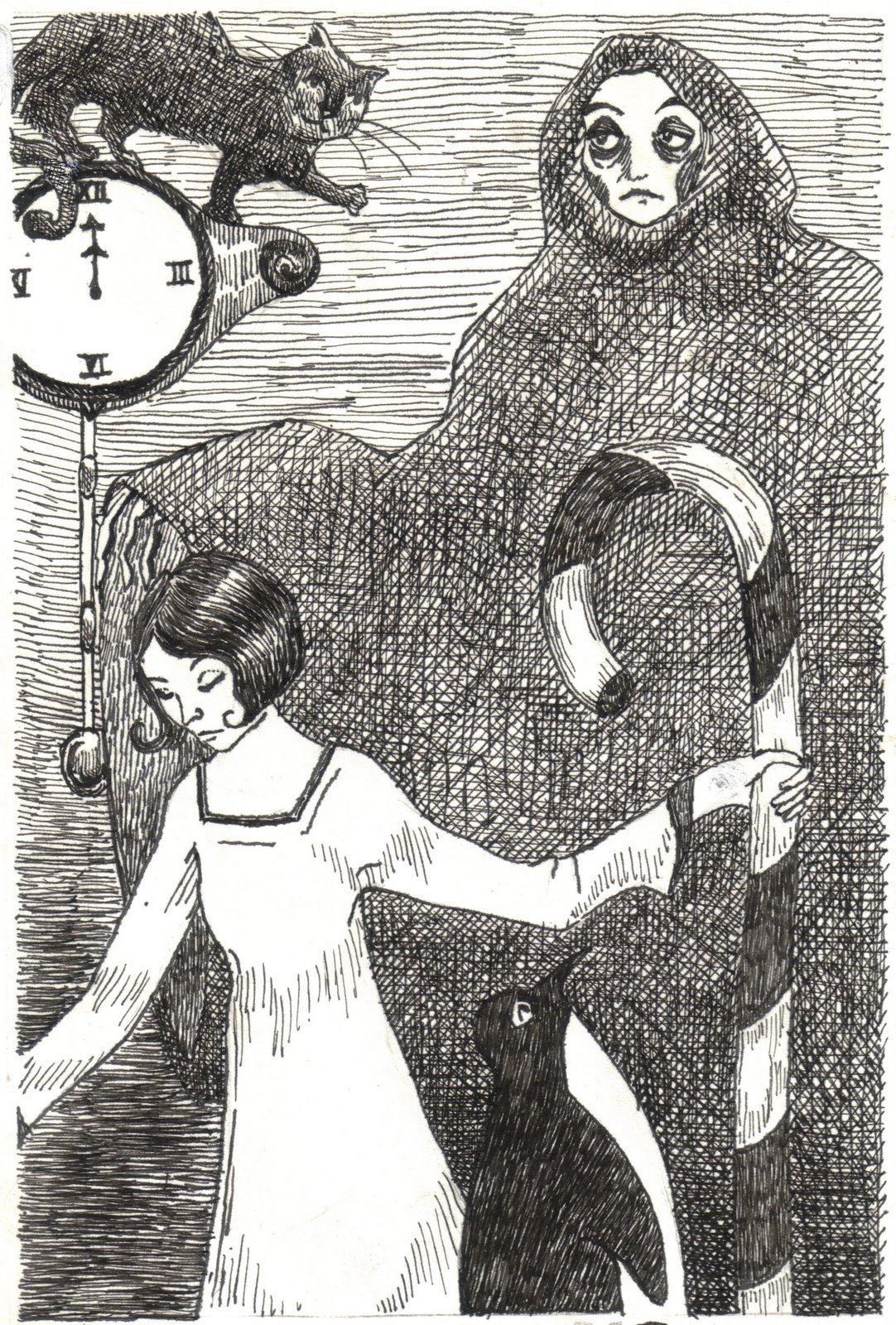
I'm doing a damaged little girls and squid series. The above painting isn't entirely finished, but I thought I would post anyway.

Sunday, September 20, 2009

Post-FringeNYC: His Greatness

I've seen an awful lot of theater over my 40 years, but I just realized when sitting down to write this, that I've only ever seen one or two Tennessee Williams plays performed on stage, and I don't know that I've ever seen him done particularly well. I've seen the movies, though, like everybody else, with poor, crazy Vivian Leigh playing poor, crazy Blanche DuBois and Brando and Newman and Taylor. Maybe modern actors aren't up to Williams, or maybe they're just not right for his plays. Maybe you need beautiful, serious actors with movie star charisma and speaking voices from earlier in the 20th Century. People sound so different in the aughts of the twenty-first century than they did in the mid-twentieth. Whatever the answer, the world has changed and Williams is a little out of fashion.

I saw Canadian playwright Daniel MacIvor's play His Greatness Saturday afternoon at the Soho Playhouse, where it has one performance left as a part of The FringeNYC Encore series. It shows a couple of days in the last years of (unnamed) Tennessee Williams's life. His life has become a sodden, sordid drunken mess. He is attended to by his fortyish assistant a former lover and rent boy, who now acts as Williams's secretary, nursemaid and procurer. The action takes place in a sad, mid-range hotel room in Vancouver, where one of Williams's unsuccessful late plays is being produced. The relationship between these two men, like many bad marriages, is both funny and sad.

This isn't usually my sort of play, and having seen four or five Daniel MacIvor shows over the past ten years or so, it isn't his usual play either. It was such a regular play compared to Never Swim Alone or Beautiful view. I've also sort of decided at some point that I don't care about plays or movies if they don't include and girls. About halfway through I realized, "Oh! This is Daniel MacIvor doing his own version of a Tennessee Williams play." And then it all made sense to me. It's really well done and totally worth checking out.

His Greatness
Soho Playhouse
Fri. September 25, 7pm

Friday, September 18, 2009

Select Image, Scan With Right Hemisphere, Draw

Your brain is likely very different from my brain, but my brain is happiest, I've found, when I spend a significant amount of time focusing on pictures rather than words. I've started working on a project combining words and pictures that I don't want to say very much about yet, but I will likely be posting bits of it here in the coming weeks.


I've said before, that I'm terribly rusty. I used to draw all day, every day (it was the only possible way I could have gotten through school), but now that I am no longer held captive with a pen in my hand, drawing seems to have fallen by the wayside. God, I am rusty as hell.


I've posted some quick sketches I've done over the past couple of weeks. My brain is much happier and now I must get busy with my own work. Whee! By the way, the busty blonde below is The World Famous Bob.

Wiemar Germany Was a Very Small World

A couple of weeks ago I offhandedly wondered if Lilia Skala knew Hedy Lamarr as they both worked with Max Reinhardt at about the same time. I received the following answer from Libby Skala (Lilia's granddaughter) via facebook:

By the way, both sisters - Lilia and Lisl knew Hedy Lamarr in Vienna as Hedy Kiesler, says Grace, Lisl's daughter. Also, I remember my grandmother saying she was playing Hedy Lamarr's mother in a Viennese stage production when a Hollywood scout came back stage after the show and said he wanted to bring Hedy to Hollywood. Thus began her film career.


I think if I ever write my Hedy Lamarr magnum opus, the Skala sisters will have to make cameo appearances.

(photo: Lilia Skala, Austria, 1930 via libbyskala.com)

Other People's Art

Yesterday, I spent the afternoon wandering around Chelsea popping in and out of galleries looking at art. It's always fun, but I was generally underwhelmed.


Rita Lundqvist's paintings are fun to look at, they have these sort of blank comic book-like figures painted on dark, empty, textile fields. I like how they looked, and maybe I'm permanently in search of a context, or of some kind of narrative, but without context they seemed a little lost and sterile. I feel as if I had one hanging in my house I would get tired of looking at it.

Carla Klein's show was in the same gallery, and I was much more impressed with it. I loved her really modern, car oriented vision of landscape. Her paintings are dark and moody and quiet, landscapes as seen through a windshield or at night. She uses a really limited palette that is full of blues and grays and feel like thunder.

Both are at Tanya Bonakdar Gallery and run through October 24.

I also saw the new Kara Walker exhibit, and I feel like a total Grinch, but I wasn't in love. When I first saw her black and white paper cut-outs my mind was well and truly blown. I really liked the white on white painting/collage (sorry, the catalog is not online), and the 3D paper works, but the video didn't work for me. It seemed oddly half-assed, the story was moving and the shadow puppets were exquisite, but the filming was sloppy and she perhaps could have used a little dramaturgical help. Her still images are so sharp, they could cut glass - here the effect was muted, fuzzy around the edges. I don't think there is much I can say about her work that hasn't been said a hundred times, her work is glorious and shocking and, I think, necessary.

Her show runs through October 17 at Sikkema Kenkins & Co.

(image: Tanya Bonakdar Gallery)

Friday, August 21, 2009

FringeNYC 13: The Antarctic Chronicles

Men Wanted

For Hazardous
Journey,
Small wages
Bitter cold,
Long months of complete
Darkness,
Constant danger,
Safe return doubtful.
Honour and recognition in
Case of success.

Men Wanted is my favorite prose poem. Of course, it's not really a poem at all, it's the advertisement Ernest Shackleton placed in The Times in 1913 when he was in search of men to accompany him on an expedition to journey to the South Pole. The best part is that he received hundreds and hundreds of responses.

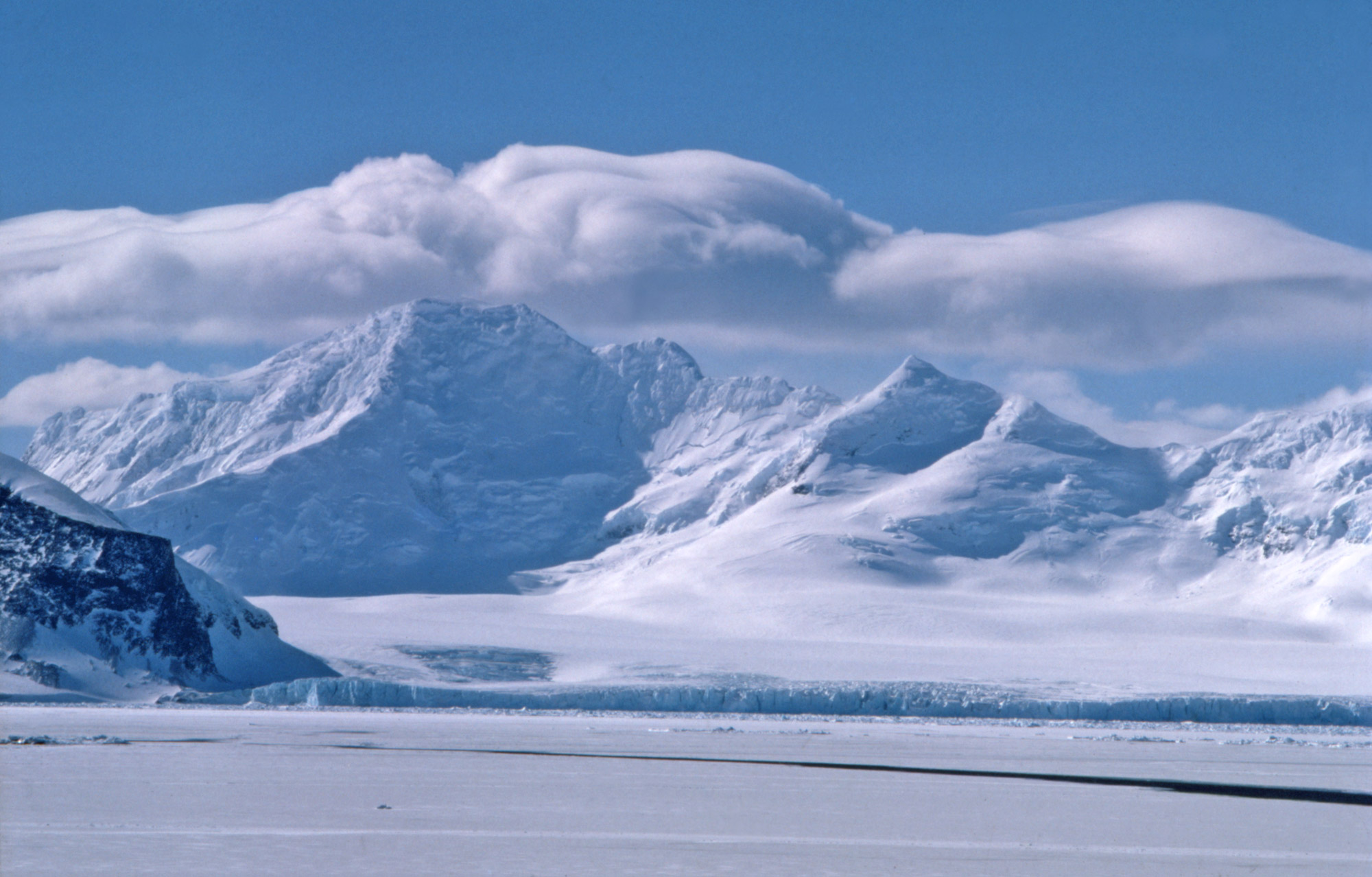
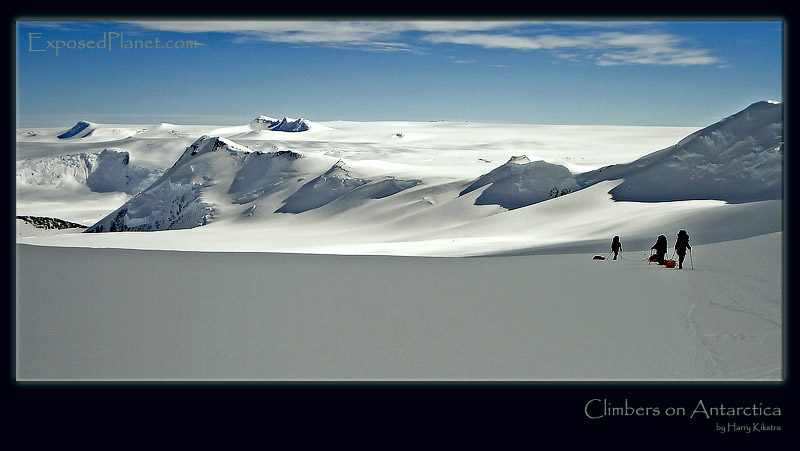
I'm a little obsessed with Antarctica. I've mentioned this before here on this blog when I went to see Werner Herzog's remarkable documentary. Most people reading this know I wrote a play called Antarctica about two teenage girls and their journey to a fictional continent of ice and snow called "Antarctica" and their search for something else, for something that would make their lives different, better. For reasons I don't entirely understand, an inordinately large part of my psyche is taken up by dreams of a landscape that is so beautiful and severe it looks like another planet.

This brings me to Jessica Manuel's The Antarctic Chronicles, a show in which she tells of the year she spent in the icy south after answering the modern equivalent of Shackleton's Times advert. I loved this show, but I've been sitting on this review for days now because I'm having a lot of trouble writing about it. There are so many thematic parallels between Manuel's non-fiction, but stylized account, and my fictional play about a pretend Antarctica, that it just feels a little uncanny to me. Both pieces are about very young American women who feel lost and at loose ends and view Antarctica as a path to a new self and a meaningful life. Both pieces use the phrase "there are no polar bears in Antarctica" repeatedly. In both, girls are driven nearly mad by the brutal environment. But hers is real and mine is not, so enough about my play and on to hers.

Jessica Manuel spent a year in the McMurdo Station on Ross Island where she worked as a fuels operator, lived through a winter of darkness and monitored the color of her pee. She also saw the sun set and then rise again in the space of a minute, went from FNG (fungie, i.e. Fucking New Guy) to pro with "ice time", made crappy yet hilarious films, drove a rig, fueled planes, visited the Russian station, fell in and out of love and changed her life. That's it I guess, I mean what draws people like me to the idea of travel - as a catalyst to life change. In my play Magda says if they travel to Antarctica "it will change everything". For Jessica Manuel it did, she found a sense of self and a purpose that was lacking. The show itself is huge amounts of fun - hilarious and self-aware.

Winston Churchill thought Shackleton's Imperial Trans-Antarctic Expedition of 1914 was a waste. The Pole had already been located by Amundsen and Scott, who died there. He went anyway and encountered disaster, but pulled every single person who went with him out alive. He was revered by his men, and rightly so. His story is extraordinary and inspiring in the most old-fashioned heroic sense. I firmly believe that there are things in the world worth doing and that the world in the the early 21st century is both vast and tiny. The age of exploration is mostly over, but one's life can still be altered by journeys to icy lands. As Ernest Shackleton once said: "We all have our White South."

After my show Antarctica closed in FringeNYC 2007, a male acquaintance told me that he enjoyed it, but he thought the story of Polar exploration was essentially a man's story. All I can say is that he doesn't have any Ice Time whatsoever.

Because it took me such a ridiculously long time to write this piece, The Antarctic Chronicles has closed in NYC. But hopefully she'll remount it again.

(photo: Zoee B)

Alice Guy Directed Over 300 Films


I've been pretty much neglecting The List I began about a year ago - perhaps I was disheartened by the Twilight debacle

To recap: I started a series of posts focusing on various female film directors. I wondered why so shockingly few women through the past 100+ years have had successful careers (particularly in the US), and why it was still so ludicrously difficult for women to get movies financed and made.

Today, Fuzzy Bastard forwarded a really interesting article about Alice Guy, yet another female pioneer of cinema I had never heard of. Back in 1895 when the Lumière brothers more or less invented the movies and screened their short films, Alice Guy, a secretary at the Gaumont still camera company was in the audience. Gaumont "allowed" her to film some shorts on her day off for no pay, and Guy proceeded to invent narrative cinema. A surprising number of her films survive, which makes it even more unfortunate that she has been almost entirely forgotten. Wonderfully, Kino has just released a DVD which contains more than 50 of her films. Here, she filmed music hall performer "Little Tich" in 1900. Jaques Tati cited this short as an influence.


"Le Tonneau Ivre" is a charming little comedy short from 1906:


Guy eventually made her way to New York and set up a film studio in Fort Lee. She subsequently directed some films for the Hollywood studios, returning to France in 1922. She was unable to find work and never made another film. She died in New Jersey in 1968.

(image: Kino)