Sunday, August 16, 2009

FringeNYC 13: Pie-Face! The Adventures of Anita Bryant

Poor Anita Bryant.

Okay. Some background. I had vaguely heard of Anita Bryant before seeing Milk and before seeing David Karl Lee's show Pie-Face! The Adventures of Anita Bryant, but her "Save Our Children" campaign was in the late '70s, and both the Gay Rights movement and right wing faith based politics were things pretty much absent from my childhood home. She was the runner up in the 1959 Miss America Pageant, she had a successful recording career (her music appealed to the Pat Boone set), became the spokesmodel for Florida orange juice, and pitched among other products Coca-Cola, Tupperwear and Kraft Food Products. She married and recorded albums of Christian music. She was also bigoted, self-righteous, poorly informed, self-enchanted and drunk on her own certainty.

I loved Pie-Face. As anyone who reads this blog at all regularly knows, gender politics is my beat. And I sometimes have a really big problem with drag. It sometimes feels deeply misogynistic to me and I don't understand how it differs from blackface. Sometimes I look at productions featuring men playing women and I think: "Great. Even fewer roles for women on stage. What is this? Burbage circa 1580?" But I love Kiki. I love Divine. And I love Lee's Anita Bryant.

In the show's hour running time he tells of the rise and fall of Anita's repulsive crusade against homosexuality (for some reason the phrase "orange juice spokesmodel" gets funnier each time it is repeated) and the gay rights movement she inadvertently helped galvanize. Lee is a remarkable performer. It would have been so easy to play Bryant as a really ugly caricature, but he doesn't, he is doing something much more interesting. The things she says are stupid and bigoted and hateful and uninformed. She is an obvious precursor to Sarah Palin, and likely appealed to the same demographic. But she was crushed like a bug by both the culture wars of the '70s, and the narrow, patriarchal way of life she championed. I don't necessarily feel sorry for her, but Lee is playing an actual flawed human being whose downfall was largely of her own making. He's wickedly funny, but not needlessly cruel. The story of gay liberation (and he includes in his footage clips of gay women as well as men) that is interwoven with Anita's story is incredibly moving.

So, I guess, poor Anita Bryant. It's tough being on the wrong side of history. But I really, really hope she remains there.

And the pie incident. Honestly, I could watch it all day:


Pie-Face! The Adventures of Anita Bryant
Kangagirl Productions
Writer: David Karl Lee
Director: Kenny Howard
Actors Playhouse, 100 7th Avenue South
Remaining performances: Wed 19 @ 3:45, Sat 22 @ 7:45, Sat 29 @ 2:15

(photo: Dixie Lee Photography)

Wednesday, August 12, 2009

All Righty Now

Over the past few years I've become really interested in the way brains work. Or, to be more specific, the way my brain works.

I'm good with pictures, bad with words - particularly spoken words, as there is nothing to look at and I have trouble latching onto ideas or facts and get really easily distracted. I was the worst waiter in the world as I could never remember anybody's order. My visual memory tends towards the astonishing. I can remember pretty accurately anything I look at. The problem comes when I try to tell anyone what I see. I might be able to see everything perfectly, but the moment I try to speak about what I see, it all falls apart. I can almost feel an internal click, and I need to translate what I see into actual words that I then have to speak aloud and I can practically feel everything slowing down and grinding to a halt inside my head. I find making this switch both very difficult and frustrating.

Growing up, I used to draw constantly. I don't any more, and I miss it. I feel rusty and out of practice. For a long time I thought I Wasn't Good Enough. I don't think I could have even articulated was I wasn't good enough for. But, I want to draw things again. To be honest, I think I saw that as one of the purposes of this blog, and it's something I haven't done at all. But - no more! Here's a drawing I did a couple of months ago at the Society of Illustrators Jazz and Sketch night:


I've never been particularly great at drawing from life. I just have to get it together and make more art, I guess is what I'm saying.

Thursday, August 6, 2009

Can you think of a bigger douchebag?

I had a total delayed reaction to something I read/wrote last week:

She married a really creepy arms manufacturer who although half-Jewish, consorted with Hitler and was an enthusiastic fascist.

I was writing about Hedy Lamarr's first (of six) husbands, Frederich "Fritz" Mendl, who was a Jewish, Austrian Fascist. I mean, it's completely mind-boggling. Out of curiosity, I decided to do a little digging (i.e. I googled him). He was more of a Mussolini fascist, rather than a Hitler fascist, but - according to Lamarr's autobiography - he still invited Hitler to his parties in the '30s. As well as keeping Lamarr (who married him when she was 19) locked in his castle, acquiring and burning all the copies of her film Ecstasy that he could get his hands on, he also allegedly forced Lamarr to sleep with Hitler in order to cement an arms deal. As the '30s progressed, he transferred most of his holdings to Switzerland, and after Austria was annexed to Germany and the Nuremberg Laws were enacted, his remaining properties were seized. He moved (to be clear, he didn't flee, he simply relocated) to Switzerland, where as late as 1940 he was trying to do business with Hitler's Reich. When this didn't work out, he traveled to Argentina, where her remained for the duration of the war and served as an adviser to Juan Peron. After the war he returned to Austria.

I just felt like sharing my researches into someone who was obviously one of the most horrible people on earth.

And I do apologize for what is turning into an All Holocaust Week! here on my blog (It's not over yet!)


Hedy Lamarr (at the time, Hedwig Kiesler) in Ecstasy, 1933

Safe At Home


As everyone knows, Laura Ling and Euna Lee were sentenced to 12 years of labor & re-education in North Korea a few weeks ago. From what I've read, it sounds as if they were likely snatched from the Chinese side of the N. Korea/Chinese border, but no one really knows what happened except for the women themselves and the incredibly scary N. Korean government.

Now, in a completely movie-ready turn of events, Big Daddy Bill Clinton flew to North Korea, met with crazypants dictator Kim Jong Il, swept Ling and Lee into Steve Bing's private loaner jet, and brought them home to their relieved and happy families. Yay! The pictures of their arrival at the Burbank airport are lovely and joyful. I may be jumping the gun a bit, but I really want to read the Ling sisters' inevitable book, and will totally watch the movie on whichever cable network it airs.

For me, though, this is pretty much where the happy ends.

I know this is going to come off as unspeakably glass half empty of me, or like Woody Allen in Annie Hall, when he said, "I can't enjoy anything unless everybody is. If one guy is starving someplace, that puts a crimp in my evening." I know we should all be really happy and everything, but when Lee and Ling were sentenced a few weeks ago, I spent a really depressing couple of days reading eye witness testimony about the N. Korean gulag system, which, I'm ashamed to say, I really knew nothing about prior to Lee and Ling's trial. The two young journalists didn't wind up in a labor camp. They are American, and therefore valuable. That, at least, is the perception most Americans have of themselves in relation to the world. Amidst all the celebrating, I really hope that people don't lose sight of the fact that nothing has changed. The N. Korean gulags are still going strong. If you want your week ruined, take a little time and read about what they are like.

Which started me thinking abut other Special Prisoners (as we'll call them for the purposes of this post). In 1944, Gemma LaGuardia Gluck, sister of NYC mayor Fiorello LaGuardia who was living in Budapest with her hungarian husband at the time of the Nazi invasion, was arrested as a political prisoner and sent to Ravensbrück Concentration Camp. This was by no means easy. The conditions were brutal, but compared to the fate of most other Jews (including her husband, who died in the gas chambers at Mauthausen), she was placed in comparative safety - because as the sister of an influential American politician, she might wind up being useful. Gemma survived and finally managed to emigrate to the US with her children. She did not have an easy war, but her status as an American did likely save her life.

A much more squirrely prospect in every way was Gluck’s fellow Ravensbrück Special Prisoner, the Polish Countess Karolina Lanckorońska. She was an aristocrat, an art historian and a fierce Polish nationalist. She was a really admirable character in many ways – she was fearless, generous and an intellectual patron of the arts. When first arrested after the German invasion of Poland for her Resistance work, her reply to the Gestapo was, “Not just now, I don’t have time for this.” Under Gestapo questioning, when she was asked, “Are you an enemy of the German Reich?”, she replied, “Yes, obviously.” She was sentenced to death, but her sentence was commuted. She bounced around various German prisons, finally being sent to Ravensbrück, where she was given a nice apartment and plenty of food, as she was under the protection of the Italian Royal family and, reportedly, Himmler. She gave away her food to her fellow prisoners, and insisted she be allowed to join the general population. After a hunger strike, her wish was granted. In her memoirs, she rhapsodized about the great joy she felt when she entered the camp proper, as she felt it to be a deep insult to be treated differently from her fellow Polish prisoners. One can’t help but think this might be a bit disingenuous. She did lots of good work in the camp – she educated, she organized, she used her special status to help her fellow prisoners. She was also casually anti-Semitic (duh), truly saw herself as a modern day Christian martyr launching a glorious Middle Ages-style crusade of righteousness (her words,, although I am paraphrasing) and her views about what the war was all about (Polish patriots v. German invaders. End of story.) was slightly, ahem, narrow. Also, one wonders how much of her unbelievable bravery (at one point she seemed so unconcerned for her own safety, a cellmate thought she was a madwoman) was due to the fact that she somehow believed, as a Polish aristocrat, that she was a god among mortals.

Which brings me back to Americans' view of themselves, particularly abroad. It feels a bit odd to say this view of being inviolate is that of white, middle class Americans when the women whose plight began all this are of Asian descent, but maybe not as it's really a question of class, as the Polish Countess would have been happy to tell you. It's American exceptionalism brought to the individual level. I guess what I'm trying to get at is that as happy as I am that Ling and Lee are home and safe, I can't get it out of my head that there are thousands of men, women and children who are currently suffering the fate we feared would befall the two Americans. Even Jon Stewart last night made a joke about the camps (saying that they would have likely been put to work manufacturing toys for Chinese children while showing stock footage of a clean, happy looking Asian factory) which, from all the testimony I've read, is just insulting. This is a subject very, very few Americans know anything about and now that the two Americans are safe, we can go back to making jokes and ignoring the suffering of these thousands of people. I know I'm coming off as shrill and humorless, but the word I choose to use for women like Lee and Ling and the Polish Countess isn't "special", but "lucky".

Friday, July 31, 2009

Metphysicians and Engineers

I would like to take a quick break from my regular film/art/books beat to praise of some of my favorite lady scientists. A friend of mine writes the science quizzes for science.discovery.com, and the one posted today is all about women scientists (side note: How often do you hear the phrase men scientists used in a sentence?) and it's simply every kind of awesome. I did...just okay.

I hadn't thought about Ada Lovelace in ages. She was a writer and mathematician, although she referred to herself as "an Analyst (and Metaphysician)", and was one of the first visionaries who saw the path to what we now refer to as a "computer". The only reason I had heard of her was through reading about her father, Lord Byron - who she never met, but was buried next to. Her mother, Lady Byron, must have been pretty remarkable in her own right. She was the one who made sure that Ada was educated in math and music in order to negate the dangerous poetical influence that was her paternal birthright. She died when she was younger than I am now, of cancer.

Not included in the quiz, but another minor obsession of mine is the Austrian-Hungarian film star, Hedy Lamarr. She was one of Hollywood's most beautiful glamour girls of the 1940s. Her life is completely fascinating. Born to an upper middle class Jewish family in Vienna, raised in Budapest, she worked with the legendary Max Reinhardt and became a major film star in Europe by the time she was in her late teens. She married a really creepy arms manufacturer who although half-Jewish, consorted with Hitler and was an enthusiastic fascist. He kept Lamarr a veritable prisoner and took her everywhere with him as he was a paranoid freak - including all his meetings with scientists and engineers. She learned a lot. In 1936, she fled to Paris, and from there to London and, finally Hollywood - one of the many refugees from Hitler pouring into Los Angeles. She became a major star, but was never a major actress. In the early 40s, she worked with a friend, avant-garde composer George Antheil, on what they then called a "secret communication system". It was an early form of Spread Spectrum Technology, which is used, for example, in WiFi networks and cell phones. During the war, she wanted to join the National Inventor's Counsel. They wouldn't let her. Much like another beautiful, fine-featured, dark haired movie star, she had a major shop lifting scandal which derailed her career for a while. Very late in her life she was honored for her discoveries both in Europe and in the US.


"Any girl can be glamorous. All she has to do is stand still and look stupid." Hedy Lamarr 1915-2000

Thursday, July 30, 2009

Taxidermy Frightens Me


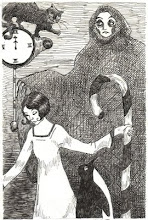
The picture at left is just fabulous. I love the strange fetishy looking fencing masks. The petite women in their Edwardian day clothing. It looks like an Edward Gorey drawing come to life. It was a part of a NY Times article/slide show called The New Antiquarians, which brought up some really conflicting feelings in me.

1. My first thought was, ooooh, how lovely, this is right smack in the center of my aesthetic!

2. I'm sort of actively trying to avoid crazy old lady-dom. Surrounding myself with random dusty ephemera in large piles of confusion and weirdness will not help me attain this goal. In some small way, my entire theory of interior decoration can be summed up in the phrase: "Please, God, don't let me turn into one of the Collyer Brothers."

3. Taxidermy frightens me. I'm always afraid it will spontaneously sprout maggots. When I mentioned this on fb, my conservator BFF said I would be more in danger of mercury and arsenic dusting off of it. These are not good things.

4. The sisters pictured above have no windows in their apartment. I need sunlight or I get deeply depressed.

5. But so pretty!

6. The much extolled clean, modern aesthetic leaves me cold. The Fred/Ginger deco interiors are about as clean and modern as I can tolerate.

7. I am completely aware of the fact that Virgodog would run screaming into the night if I tried to install some sort of bird carcass, or lizard display in the living room (though I tolerate the Spider Man head in the office, so he really doesn't have a leg to stand on).

10. I love this stuff, but Anthopologie makes me feel so dirty about it.

11. ABC Home makes me literally sick with acquisitive longing.

12. And so, so pretty.

13. As far as furnishing goes, I'm really more of an Art Nouveau/Arts & Crafts kind of girl. I really like some of the Second Empire French stuff, too.

14. But I can't afford any of it, and really don't have any kind of head for interior decoration.

15. All of this, for some reason, makes me think of Princess Langwidere and her many heads. When I was ten or eleven, I drew imagined portraits of all thirty, approximating John R. Neill's drawing style as closely as I could. This is why it's so odd to me when people say I draw like Gorey. What they are seeing are the remains of the Neill influence.

16. I really like intricate, cluttered interiors. I am also maybe not the tidiest person on earth, or the best at cleaning things as regularly as one might prefer. This is not the best mix to have with the intricate or the cluttered.

17. Sigh. I simply don't have the focus or single minded purpose to devote myself completely to a single aesthetic. I've been weirdly jealous of people who have the ability to do so since I was a teenager. When I bother to give it any thought, I realize it's probably best.

18. I think I should really contain my aesthetic impulses to art. Worrying about it in real life too much just makes me anxious.

19. I really need to draw more.

20. And dust my apartment.


GRRRRRRRRRRRRRRRR!


In a strangely post-apocalyptic turn of events, Caviglia found herself alone in a barren landscape and wondered at the evidence of the hasty - and possibly coerced departure of the picnickers.

"Thank God, I have a martini! Wait...is that a zombie?"

"GRRRRRRRRRRRRRRRRRRRRRR!", replied the zombie.

"I'm out of vermouth, have any extra?"

"GRRRRRRRRRRRRRRRRRRRRRR!"

Caviglia, sighed. "Straight gin it is! Bottoms up!"

"GRRRRRRRRRRRRRRRRRRRRRR!"

"You're cute."

Mad Men Yourself

Tuesday, May 26, 2009

Memory Fades, The Mystery is Gone


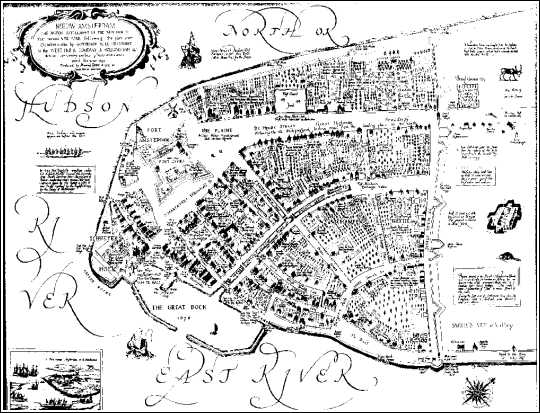
The city is an island.

This geographic fact distinguishes New York from most of the other world capitals. London and Paris expanded beyond their ancient city walls centuries ago. Houston and Los Angeles are all sprawl. In New York, there isn't much opportunity for building out. Up and over are really the only possibilities. Genteel decay is never in fashion here, there's no room for it.

"Beautiful things grow to a certain height and then they fail and fade off, breathing out memories as they decay. And just as any period decays in our minds, the things of that period should decay too … That graveyard at Tarrytown, for instance. The asses who give money to preserve things have spoiled that too. Sleepy Hollow's gone; Washington Irving's dead and his books are rotting in our estimation year by year--then let the graveyard rot too, as it should, as all things should. Trying to preserve a century by keeping its relics up to date is like keeping a dying man alive by stimulants … Would you value your Keats letter if the signature was traced over to make it last longer?"

I've always loved this passage from F. Scott Fitzgerald's The Beautiful and Damned. I don't know that I disagree with the beautiful Gloria that the preservation of places is sometimes like painting a corpse. We New Yorkers are also Americans and prefer to relegate our history to myth, we are a little uncomfortable with having it in front of us. We aren't very good at either preserving the past properly, or of letting it decay.

All this self-indulgence brings me to the bar at The Gramercy Park Hotel. Before Ian Schrager bought the place and made it over in his glossy image, I used to go to the bar in the lobby all the time.

To make a full disclosure: I love hotels. Love them. But as I've always lived in NYC, I've never really stayed in any of the hotels here - although I've been tempted. Rent a room! Pretend to be someone else! It's awfully appealing, but the post-9/11, post-Patriot Act realities are spoiling everyone's fun and taking away every American's given right to reinvent themselves at will. The ability to simply get on a train and travel somewhere else, to step out of one's own life and decide to become someone else is now a part of our mythic collective past. Flitcraft would have had to stay where he was and go to therapy.

All we have left to us are hotel bars. They still retain the glamour that is created by impermanence. No identification is required. You can be whoever you want.

But, wait - stop. This romanticizing of transience is becoming nearly all I write about. Abandoned children who dream of a pirate past, an itinerant criminal whose seedy existence is glossed over with dreams of '40s technicolor, a journey to a made-up Antipodean continent, a foundling whose adopted mother dreams forever of faraway places. I've never been anywhere without wanting to move on to the next place. As an adult, I hated the ending of the movie version of The Wizard of Oz. "There's no place like home". If home is dust bowl and depression blighted Kansas, I say there's no place like Oz!

I've never been very good at self-reflection. I've always loved to travel. Hotel bars are the perfect place to go when one is at home but you would like to pretend to be somewhere or someone else.

The large, dark bar of the Gramercy Park Hotel was somewhere I used to go a lot. Full of ratty couches, ottomans and upholstered chairs, it was comfortable and faded. The hotel was built by Bing & Bing in 1925, Humphrey Bogart lived there for two years and Babe Ruth apparently loved the bar as much as I did. The hotel was a center of New York bohemianism, waxing and waning through the years in the usual bohemian cycles. The first season cast of Satuurday Night Live lived there, as did Edmund Wilson, Margaret Hamilton (the good witch of Gramercy Park) and James Cagney. Through the 70's and 80's lots of bands stayed in its shabby rooms, including Blondie and the fictional Stillwater.


Ian Schrager scooped up the Gramercy's decaying glory in 2003. Julian Schnabel designed the new interiors. One of the reviews on travelfinder said the place felt like a movie set - they aren't wrong, the place feels as if it is trying a little too hard, it's too expensive for actual artists or writers or bohemians of any stripe, but it is designed to make rich out of towners feel as if they are in the real New York. It's entirely erzatz, and although the art on the walls is real, the hotel feels as if it isn't. Maybe I'm just grumpy because the bar prices are ludicrously expensive.

Things in this city decay or they are rebuilt. They never entirely disappear. The ghosts remain. I sat in the bar with a friend sipping a $19 glass of Riesling. It was still dark, and full of no longer shabby upholstered furniture and banquettes. But the mystery is gone and the ghosts are awfully uncomfortable.

Saturday, January 24, 2009