Showing posts with label fashion. Show all posts

Monday, June 20, 2011

A Dress, A Car, A Hat

I was raised Catholic and though not such a part of the modern church, saints reliquaries have always interested me.

(side note: honestly, at this point, I'm not entirely sure what it's all about these days now that it no longer seems to rule Europe or commission great art or give the younger sons of nobility something to do with themselves)

Back to reliquaries. If you don't know, they are containers of objects, often pertaining to saints. Maybe a finger bone, maybe a cup, perhaps a bell, oftentimes a hunk of the true cross, occasionally a skull. These items were (and by some, are) deemed holy. But, they are mostly a remnant of a culture that has long turned to dust, and other objects are of far greater interest to the public.

Which brings me to the sale of Debbie Reynolds's movie memorabilia this past weekend. Oftentimes when such sales are announced, and I look at the list of pieces to be sold, there's usually one or two truly exciting things, and the rest is far more ordinary. But this sale was the move equivalent of opening up the storerooms of the Vatican and selling off all the high Renaissance masterpieces. Looking at the list of items it seemed as if all of movie history was being sold off at once.

We're a strange species with a bent for mysticism and talismans. The biggest news from the sale was that Marilyn's iconic subway dress sold for approximately 5 million dollars. Of course, there are soulless rich people who snatch things up for investment purposes, but the level of excitement the sale of these dresses and objects has caused feels like religion. These pieces engender an ache, a longing, and remind us of feelings that might be something akin to holiness, or at least love.

It's a big cynical world, so oftentimes lacking in joy. Old movies whose stars are mostly gone from this earth, need to be preserved. Something like 90% of silent movies are lost to us forever. But, on a more positive note, the wonders of the internet have brought old and seemingly forgotten movies and stars to more delighted people than since they were first released. There are entire Tumblrs devoted to Howard Lloyd. Teenagers happily rave over pictures of Gloria Swanson and Myrna Loy.

It's not just me, is it? Wouldn't having Chaplin's bowler in one's living room seem magical? And, yes. That was one of the items for sale. And, no. I wasn't the buyer.


Above left is a dress Claudette Colbert wore in Cecil B. deMille's Cleopatra.

Laurel and Hardy's Model-T Ford


Cagney's costumes from Yankee Doodle Dandy


Basil Rathbone's Sherlock Holmes coat (via Flickr)


Seemingly all the costumes from Singing in the Rain.

Also included: costumes from the 1938 Marie Antoinette, a 1922 Valentino matador costume, a box of jokes hand written by W.C. Fields, Planet of the Apes costumes, Elizabeth Taylor's costumes from Cleopatra and Raintree County, Mary Pickford's dress from Taming of the Shrew, Marilyn's "Little Rock" dress from Gentlemen prefer Blondes, the Santa suit from Miracle on 34th Street, an on and on and on. Sigh.

All photos unless otherwise noted are from wormholeriders.net

Monday, June 13, 2011

Puppets, Fairies and POP


I mentioned this spread this morning, so I thought I might as well provide a picture to go with it. Puppet wears Alexander McQueen. POP. 2007.

I haven't yet found another fashion magazine that was as relentlessly creative as POP was under Katie Grand. From the same issue, a fairy wears Yves Saint Laurent below.


Italian Vogue and the Myth of the Plus Sized Model

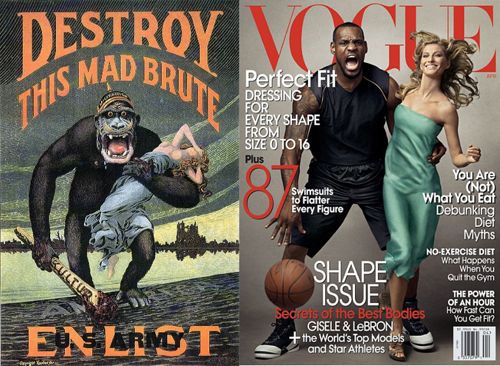
I've written before about how tired and sad I find the current incarnation of American Vogue, and about how I think it might be time for Mrs. Wintour to call it a day. American Vogue is mostly white washed (or appallingly racially insensitive), and filled with spread after spread of white girls leaping into the air in front of plain backgrounds. Mrs. Wintour - stop hiding Grace Coddington's light under a bushel!

Not so with Italian Vogue. This is greatly due to the latitude given to photographer Steven Meisel by editor-in-chief Franca Sozzani. Unlike in the American edition, the editors of Vogue Italia have gone to great lengths to feature a much wider variety of beautiful women than their compatriots in America.

Back in 2008 they came out with what they called the "Black Issue", featuring black models exclusively throughout the magazine - except, of course, in the advertisements, the faces in which were nearly all white, making for a telling juxtaposition. This generated a great deal of talk of steps in the right direction and of exceptionalism both. Over all, the issue was extraordinary and really showed up how narrowly beauty is still construed (Mrs. Prada, take note: I blame you for a lot of it). Also of note - the issue was a blockbuster. Particularly in the United States, it sold and sold and sold and back issues on ebay go for about $80. But, contrary to what naysayers predicted, the magazine has continued to be innovative in their art direction and choice of models, and the magazine, as a whole, is far mare integrated than the norm.

The June 2011 cover and feature spread of Vogue Italia feature what are referred to in the industry as "plus sized models". As most people with an even passing interest in the industry are aware, there has been a great deal of worry over rapidly shrinking models. Women such as Coco Rocha have spoken out about how they have been encouraged to "look anorexic". The problem is simple: models should be pretty much the same size as each other so that they can fit into the samples without much in the way of alterations. That's simple practicality. The question that no one seems to be able to answer is: why do the samples have to be so tiny? There has been a great deal of hand-wringing over the effect on young girls and their perceptions of themselves and unattainable standards. Which brings us to the world of plus size models.

Like all models, the plus sized ones are beautiful, tall and pretty much flawless. The average size is an American 10 or 12 for plus size models (but these aren't, as some of you might know, actual plus sizes), and they work mostly modeling larger sized clothes or for print advertisements for various products. Rarely will you see a plus-sized model in a mainstream fashion magazine. But this is slowly changing. Glamour Magazine has started featuring larger sized models in recent years, and a few other magazines have followed suit. And then the most maddening thing of all happened. People started hand-wringing over the fact that plus-sized models might lead young people to believe that unhealthy life-styles are okay.

This made me want to bang my head against my desk until I bled.

If there's one thing (well, one thing among many) I'd like to get through the world's thick, stupid head, it's that aesthetics and fashion are separate from obesity and ill-health. Plus sized models are fit and healthy (unless they have some sort of underlying health problem we don't know anything about as we don't know these people, but that goes for, like, everyone). The only realm in which these women are considered outsized is in the world of very high fashion. Because they cannot, just like all the rest of us, fit into tiny sample sizes. They are not obese, unhealthy, over-weight or anything other than professionally gorgeous. I am completely mystified how anyone could thing that the picture above left could lead any vulnerable young woman down the sad road to obesity and horror (there's much sarcasm here).

But the most upsetting thing is -the skinny women are awful because they encourage women to be anorexic. The larger models are awful because they encourage women to be fat. It's unwinnable and ghastly. Here's the truth people: Ladies, just like gentlemen, come in many shapes and sizes. Some are deemed fashionable, some are not. This is about aesthetics. Health is abut the state of one's insides, something that is unknowable from either a glance or a photograph.

Back to Steven Meisel's editorial. It's one of the sexiest I've ever seen, Meisel is a brilliant and creative photographer and the young women in the spread are gorgeous. It is telling that they are, for the most part, undressed. Katie Grand, when she was still heading up POP, managed to coerce designers into making large sizes for Beth Ditto and others, and teeny sized for marionettes in one of my favorite photo spreads ever. But she might have magic powers and I've never seen anyone else accomplish that feat (though one would think if she had the inclination la Wintour could make that happen, but, as we all know, she lacks the inclination).

Still more images of non-white women, larger sized women or (heavens!) larger sized non-white women is all to the good. Particularly with most designers not casting non-white models because they say they "don't fit in with their aesthetic" as white women are seen as unthreateningly neutral. There are always more frontiers to conquer, and one delightful mini-trend I've noticed - again in Vogue Italia, when researching this piece - is the use of older models. Forty-seven year old Kristen McMenamy graced the cover in May, and forty-one year old Stella Tennant did the same in March. Maybe things are starting to crack!

Tuesday, May 31, 2011

Vogue, 1946

Hattie Carnegie dress. Erwin Blumenfeld photo. Vogue, 1946

I love how surrealism completely infiltrated fashion photography (after all, Vogue paid the bills for many an artist). I also love how even for a sort of workaday spread, Blumenfeld goes all out.

Monday, May 30, 2011

Vogue: Cover by Dali

I occasionally buy decades old issues of Vogue when I see them and have the cash. This 1944 issue, however, can't really be had for love or money (okay, maybe for love).


(image via kenodoxia.tumblr.com)

Thursday, May 26, 2011

Gentlemen and Flappers

Don't we all sometimes feel like we have a flapper inside trying to get out? Even me, who is so broody and anti-social. That said, one sometimes forgets, that as radical as the changes for women were at the start of the last century, there were many changes for men, too. After the aestheticism of Oscar Wilde and after the stuffiness and formality of the Victorians were thrown over, men as well as women were done with being buttoned up and middle aged and embraced youth.

J.C. Leyendecker was likely the most successful commercial illustrator in the first decades of the 20th century (before that honor belonged to Norman Rockwell). Famous for his illustrations of the 'Arrow Collar Man' and for his Saturday Evening Post covers (He painted something like 300 covers for them). His most famous image today is from a 1922 Life Magazine (not that Life, the other one) cover, called The Flapper. But, flappers aside, Leyendecker likely more responsible for how we picture men in the early 20th century than anybody else. He used as his model his "live-in companion", Charles Beach, with whom he resided for many decades. Leyendecker never officially came out, so this is all really speculation but, I mean, really. It's just unfortunate he lived in a time when such subterfuge was deemed necessary.

Sadly, the decline of the collar industry hurt his career and his close identification with the decadence of the 20s didn't help either, after the crash in '29. He spent the remaining decades of his life in his estate in New Rochelle, living in near seclusion with Beach.

Some examples of his lovely and elegant work are below:


Wednesday, May 25, 2011

Housing Works Is The Best!

I'm about to get all service-y again. As many of my fellow residents of Gotham know, Housing Works is one of the many things that makes living in this city a joy. Well curated Thrift Stores and auctions in many neighborhoods around the city and their truly wonderful book store. Most important, of course, is the good work they do on behalf of the homeless and people suffering from AIDS.

I, like many of us, have seemingly piles of old clothes to get rid of, but I'm not super fond of the Salvation Army's policy on homosexuality (to say the least), and because of rising rents it's getting more and more difficult to find places nearby to take one's old clothes. There used to be drop off bins, but they seem to have all disappeared.

Just today, I learned via the terrific Thrift Store Confidential blog, that Housing Works, in a partnership with the City, will now be placing clothing recycling bins in buildings around the city. I'm not entirely sure what this means for us residents of Brownstone Brooklyn, but hopefully there will be some sort of creep.

If you are interested in having your building participate, go here.

Friday, May 20, 2011

lluminating Fashion: The Morgan Library

I often think about the semiotics of Fashion and Clothing (not exactly the same thing), so I'm champing at the bit to see Illuminating Fashion: Dress in the Art of Medieval France and the Netherlands, an exhibit at The Morgan Library which opens today. In it, they purport to chart the evolution of fashion in (of course) France during the Medieval Era through illuminated manuscript illustrations.

So rarely do so many of my obsessions come together in one exhibition! Illuminated manuscripts are some of the earliest European illustrated books, mostly rendered in egg tempera, one of the hardiest mediums known to man. The surviving pictures are still as bright and fresh as they day they were painted.

For many hundreds of years, one was able to tell precisely where a person fell on the social scale just by glancing at them. Strict sumptuary laws prevented any but the entrenched nobility from wearing certain fabrics and colors and styles. It wasn't until the rise of the prosperous merchant class in the Renaissance that these laws began to be stripped away. Nearly all of what we know about what people wore in pre-modern times is from art as textiles rarely survive so long. Because of this, our understanding of undergarments is minimal. Fashions moved slowly in a time before travel was common and before Mr. Gutenberg invented his remarkable press. Great world events influenced dress remarkably - the Crusades and the opening of the East brought silks and velvets and brocade to Europe, and the shapes of clothing changed as well. The corset became de rigueur in the 14th century. So, needless to say, I'm looking forward to seeing what the curators of this exhibition have put together.

For information about visiting The Morgan Library and Museum, go here. The exhibition runs from today through September 14th.

Wednesday, May 4, 2011

Alexander McQueen: Savage Beauty


Today, the long anticipated Alexander McQueen exhibit opens at the Costume Institute at the Metropolitan Museum of Art. The designer committed suicide in 2010. It's always a tragedy when a beloved artist leaves this mortal coil in his prime, but the thought of him being so miserable whilst being so brilliant and renowned is just heartbreaking.

His work was witty and achingly beautiful. The picture above is part of a Grace Coddington styled spread in Vogue featuring model Coco Rocha (among others) wearing his creations. Some samplings from the exhibit below. I'm likely going to go some Friday first thing in the morning, sketchbook firmly in hand, to beat the crowds.


Particularly for those of my readers who are theater folk with little knowledge of fashion: his runway shows were truly beautiful living and ephemeral pieces of art. See this video montage below, courtesy The Met and Alexander McQueen's estate:

Thursday, April 28, 2011

I'm just an addict at this point

Two more cinemagraphs by Jamie Beck. I'm completely and utterly addicted to these lovely, lovely images. The first one is from the series she did with model Coco Rocha, who always seems to be doing and saying interesting things. She came to the world of fashion via the unlikely route of competitive Irish step dancing in her native Canada. She'd never worn anything other than jeans or a school uniform before becoming a model and has been something of a bastion of sense in a senseless industry, speaking often and publicly about eating disorders and the pressure to acquire them. She's the model who was once famously told, "You need to lose more weight. The look this year is anorexia. We don't want you to be anorexic but that's what we want you to look like." She's also something of a throwback to the supermodels of yore when beautiful women with big personalities were in favor, rather than interchangeable 15 year old Latvians. She once step danced down Jean Paul Gaultier's runway.

Photobucket

I can't stop looking at this arresting New York moment in which a brief moment, a flicker of movement, has been captured for all eternity. Magic!

Photobucket

Thursday, April 21, 2011

BREAKING:

AbFab is coming back!

I repeat, Absolutely Fabulous is returning this summer with THREE NEW EPISODES.

Below, is the original skit from French and Saunders .


Cheers, Darling.

I DON'T WANT MORE CHOICE, I JUST WANT NICER THINGS!


And this:

Wednesday, April 20, 2011

Cinemagraphs by Jamie Beck

The animated gif has been around for as long as the internet has existed (and longer still). They are easily created little graphics that can capture a piece of a television show:

Photobucket

Or make a point in a discussion:

Photobucket

Or are just really funny:

Photobucket

But thus far, they haven't really been created for the purpose of art. Books and magazines and newspapers printed on actual paper are soon to be done for. Soon, only the poor will do something so wasteful and ridiculous as not read off a screen. And then, I assume, the usual switch will happen. Paper will be rare and pricy and the rich will covet it. But, soon, magazines and books will mostly be digital. I don't think this has been thought through much in terms of content, and the capabilities digital files possess. That will come, I am sure.

Photographer Jamie Beck has begun creating what she's calling cinemagraphs. Animated gifs that are using technology to create moody little moving photographs. They're interstitial nature. They are neither film or photo. Below, she collaborated with model Coco Rocha in these lovely shots taken in Rocha's apartment. It's an interesting experiment, and I look forward to seeing where it will lead.

Photobucket
Photobucket
Photobucket

For those of my readers who have gotten tired of the decidedly (but wholly unintentional) fashionable bent The Cabinet has taken over the past week or so, here is another shot by Beck of a gorgeous old timey barber shop at 71st and Lexington that looks like something one can only visit via time machine:

Photobucket

The four above gifs are via Jamie Beck's blog, From Me To You, and the images belong to her.

Saturday, April 16, 2011

Advanced Style: Mermaid Edition


I used to take a look at the Advanced Style blog nearly every day, but hadn't checked it out in a while, so I was glad of the Bust Magazine reminder. The blog is pretty much my dream of little old lady-hood. All these achingly glamorous older ladies in their chic or whimsical or creative or just plain old stylish ensembles (there is the occasional dapper gent, too).

Looking at Advanced style one realizes how boringly homogenized the world has begun to look. We all stare at the television and movies and magazines and advertisements and nearly everyone looks more or less the same. There's a base level of boring attractiveness in even comedic, non-romantic actors. And most people are so young, and with the scourge of plastic surgery sweeping the first world, the homogenizing process is complete.

Below, watch a delightful interview with 91 year old Ilona Royce Smithkin as she shows off her charming mermaid drawings. And - check out those eyelashes!


Friday, April 15, 2011

All The Coolest Redheads Are Turning 70

Seventy years ago on the British Isles there must have been something startling in the water, as two of the most interesting (and red-headed) women in fashion were born. In addition to the previously mentioned Grace Coddington, Vivienne Westwood turned 70 last week as well.

For good or ill, Ms. Westwood holds primary responsibility for what punk rock looked like in London, and continues to be worn in one form or another by disaffected (and fashionable) young people the world over. She is one of the most influential designers of the past 50 years. Without her, there couldn't have been an Alexander McQueen.

Dame Vivienne Westwood, like that other ravishing 70 year old fashion icon,Grace Coddington, emerged from a working class background. She spent only one semester at Harrow Art School because "I didn't know how a working-class girl like me could possibly make a living in the art world". She instead got a job in a factory and took a teacher training course (which, amazingly enough, is something Johnny Rotten would later do as well) becoming a primary school teacher, whilst designing and making jewlery that she sold at markets and on the Portobello Road. She met the always slippery Malcolm Maclaren in 1965, leaving her then husband for him. She continued to teach until they opened their shop, Let It Rock, in 1971 on the King's Road and fashion, music and social history would be absolutely changed forever.

I think Maclaren and Westwood's store is likely the most influential shop in history. In 1975 it was renamed "Sex" and became the center of punk (again, for good or ill). Westwood still owns it and sells her World's End clothing line from its historic environs. The question of who invented the punk look is always up for debate. Like all street styles, its influences and creators are manifold - but punk was small and contained in the early days, so its genesis isn't as difficult to track. Rotten and Maclaren had a lot of influence, and some of it came out of wearing one's poverty on one's sleeve. I've heard Rotten sneering at the idea of punks wearing head to toe leather (as popularized by Sid Vicious) as only rich people could afford such a look so it wasn't punk by definition. Westwood, the artist in the bunch, obviously has a lot to do with shaping the look. In later years, she has been extremely blasé about it, emphasizing that it was fashion.

Her first runway show was in 1981 and was inspired by pirates, launching what I vividly remember being the New Romantics, with Adam Ant and the early Duran Duran in their puffy shirts and Buccaneer jackets. She said she remembered seeing, when she was a small child, a woman dressed in Dior's New Look, and it left a huge impression on her. There's an extravagance in Dior that is definitely visible in Westwood's work, but it's never plays straight as Galliano often did with the same influence. It's always tweaked. Her garments are so deeply infused with fashion history, but her work, though decadent, never takes itself particularly seriously. Everything is always a little off center, as if this working class girl, now Dame of the British Empire, is still thumbing her nose at the upper classes. Most designers just make pretty dresses, but Westwood manages parody in hers.

Saturday, April 9, 2011

Grace Coddington Turns 70

Happy birthday to the lovely Grace Coddington who turns 70 today!

In this age of disloyalty and rootlessness, it's interesting to see that Coddington has worked in one way or another for the great Kraken Vogue for nearly 50 years. She grew up in a remote part of Wales, fascinated by issues of the magazine that she managed to acquire, and then at 17 won teen modeling competition and moved to London. How exciting it must have been! She wound up on the cover of British Vogue in 1960 (see left). In 1967 her modeling career was cut short after her face received substantial injuries in a car accident. The following year she was hired as a junior editor.

Aside from a brief tenure at Calvin Klein in the '80s, she has remained a Vogue employee, working as creative director of US Vogue since '88. Most fascinatingly, has worked beside, with and against her friend and bête noire Anna Wintour for all that time, as Wintour began with the company the same time she did. Their riveting work relationship (Coddington as Style Director, Wintour as Editor in Chief) was wonderfully documented by former West Egg denizin R.J. Cutler.

In some ways Coddington is the anti-Wintour. She goes about her work life in shapeless and practical black, and functional flats, her mane of red hair flying everywhere. She's all about the art and the best things that appear in the magazine have her fingerprints all over them. She's something of a genius in terms of creating beautiful and evocative imagery, and is all about art while Wintour must look out for the money.

Grace Coddington is nothing like the popular idea of a fashion powerhouse. She's smart and intuitive and dithery. May she create lovely, lovely pictures for many years to come!

Thursday, March 31, 2011

Elsa Schiaparelli: Surrealist Fashion Icon


I'm beginning to feel a lack of surrealist couturiers, so I thought I'd do a brief Elsa Schiaparelli posting. She was an artists and a dressmaker and an innovator. See above her famous shoe hat of 1937 on which she collaborated with Salvador Dali. Below is her lobster dress from the same year.


Most innovative of all, her skeleton dress.


I can't be the only person who longs for a time machine assisted Gaga/Schiaparelli collaboration, can I?

Wednesday, March 30, 2011

Poor Evelyn Nesbit: The Crime of the Century, Part 3

There has been a slightly longer gap between the posting of this latest chapter of the lovely Miss Nesbit's odyssey than originally intended, so if you have missed the earlier installments click here for part one and part two.

Part 3.

Oh, Evelyn. Really, my heart breaks for her.

Just short of her eighteenth birthday, back home in New York City, the most beautiful girl in all the world. It should have been so easy. Men lined up round the block, more stage and modeling jobs than she knew what to do with, her brother in a fine school and her mother given an income and happy, and then finally married off to a kind and loving millionaire. Some chorus girls ended up those happy circumstances, but it's a fickle world and plenty ended their days in SROs in Times Square or worse.

Back in New York, an emotionally battered and physically exhausted Evelyn landed a chorus job (against doctor's recommendations) and did her best to avoid both White and Thaw, who returned to New York shortly after she did. Her mother was busy being romanced by an old family friend, a stockbroker who she would subsequently marry. She pretty much completely broke off all contact with Evelyn, as she had clearly found a new and far less troublesome meal ticket. So, Evelyn was on her own. Friends began telling her immediately upon her return that Harry Thaw is a crazy person and a morphine addict and super dangerous. To which, she responded, rightfully so, "Why are you telling me now? I mean, this could have been super useful information for me to have before I was stuck alone in Europe with him, right? " (I'm paraphrasing).

After ignoring his messages to her, White (pictured below) finally got her attention by saying he needed to talk to her about her mother. She immediately responded, asking if anything was wrong. He replied that it was a matter of life and death and he didn't want to discuss it over the telephone. So, she (of course) agreed to see him. He showed up and told her her mother was fine and proceded to berate her about Thaw. What both White and Thaw proceeded to do in the coming months almost broke Evelyn completely. They both coerced her into meetings and tried to make her sign affidavits and statements against the other. They both harangued her about the wickedness of the other. They both had evidence of the other's criminal behavior with minors (Evelyn and others). These two men were each obsessed with destroying the other and Evelyn (not yet 18) was caught in the middle, with no responsible adult to turn to or to help her out in any way. She moved from hotel to hotel but was always found by Thaw's private detectives. Understandably, she was sick and deeply depressed. In this state she agreed to start seeing Thaw again, but only in crowded public places.

Discouraged, Thaw returned to Pittsburgh and received his mother's (extremely reluctant) approval to pursue Evelyn's hand in marriage. His lawyers advised him to stay away from her until her eighteenth birthday. Somewhat surprisingly, he did so. White planned a party for the occasion, but on the day, Evelyn, thoroughly sick of him, refused to go and went out to dinner with a jubilant Thaw instead. White went berserk, waving a pistol around, threatening to kill "that son-of-a-bitch". Evelyn had already given Thaw's letters to her to White's attorney - she now gave White's letters to Thaw's hoping that if they each had equal ammunition they would cease all hostilities. She found it increasingly difficult to find work in New York as White was apparently using his considerable influence to blackball her.

For the next couple of years, Harry was on his best behavior and pursued Evelyn relentlessly. Thaw even sent her to Europe to study sculpture and art (with a proper chaperone, this time). He apologized repeatedly for his past acts, saying he had been overcome with fury at what had transpired between her and White. He said he forgave her. It's so awful to think of the series of events and the state of mind that enabled Evelyn to marry Thaw. She had been supporting her family since she was a child. Her mother never looked after her properly, she willfully put on blinders and used her own daughter to survive and abandoning her when the complications of Evelyn's life became inconvenient. Evelyn has been painted as being a gold-digger and a whore. But, it took Harry Thaw, with his 40 million dollars, almost four years to get Evelyn to marry him. When she was twenty, she finally did. The bride wore black.

Her married life was a gothic misery. She lived with Harry in her mother-in-law's mansion, constrained by their small-minded small town Presbyterian values. They looked down on Evelyn, feeling that Harry had thrown himself away on this worthless show person, while Evelyn found them mindless and anti-intellectual, with no interest in books, music or art. Just money and their narrow view of Christianity. In other words, she was bored senseless, and in one of her memoirs wrote that she prayed that she might have "the patience to bear the burden of her spiritual friends". One day a minister friend of Mrs. Thaw's was annoyed by one of Evelyn's little dogs, so he kicked him. Evelyn swore at him like a fishwife. Harry was increasingly obsessed with White, grilling Evelyn about him obsessively for hours. Years before, White has paid to have Evelyn's teeth fixed. Harry took her to a dentist and had all the work (fillings, everything) taken out - and redone identically. He also had a photographer come to the house and had him take pictures of Evelyn in which she posed as Bluebeard's dead wives (Seriously. You can't make this stuff up).

In June 1906, Mr. and Mrs. Thaw traveled to New York en route to London. They planned to take in dinner and a show at Madison Square Garden (an odd choice, considering Thaw's obsessive hatred of Stanford White). They had dinner at Café Martin, where they saw White across the room, who was there with his son. Evelyn began to panic, worried about what Thaw would do. They proceeded to Madison Square Garden to see a new show called "Mamzelle Champagne". The show wasn't very good and Evelyn said she would have been bored had sh not been so apprehensive about what would happen when White inevitably arrived, and sat at the table that was permanently reserved for him. The Architect arrived at the rooftop theater, a teenaged chorus girl on his arm. As the song "I Could Love a Million Girls" was sung, Harry got up from the table. A moment later, a gunshot was heard and pandemonium broke out as people realized Stanford White was dead, shot through the skull, and Harry Thaw was the killer.

Part 4: The Trial will appear shortly.


Wednesday, February 9, 2011

Palm Trees and Warm Water

When I was growing up, bathing caps were considered the least cool thing to wear ever. When swimming at our local community pool in West Egg we were, however, forced to don them. On the weekends, teenagers were exiled to this sad, shadeless, concrete, loungeless area where we could lie out on seat cushions, but we had no seats. When I was a little kid I thought it was the coolest, but when I was forced to be there, it was just a total annoyance.

I remember being six or seven years old and being fascinated by those old lady swim caps covered in rubber flowers. They seemed so much better than the plain white regulation ones we all wore. But I never imagined a swim cap like the one pictured at left. It mimics hair. I'm sure I would have been mercilessly made fun of had I worn it for real with my two piece back in the 80s, but it's just wonderful.

On a frigid, dreadful morning like today, I can only dream of beaches and swimsuits and being too warm and jumping in the ocean. Of cabanas and drinking cocktails out of coconuts and monkeys in the trees and turquoise water. I found out yesterday that a friend of mine moved to Hawaii. Though I am thrilled for her and in no way begrudge her good fortune, the interwebs tell me it feels like 2 degrees out (Fahrenheit), so I am more than a wee bit jealous. I think I would eventually get bored, living on the beach, in exile from my beloved Gotham. But then I think it would likely take a while.

Photo courtesy FIDM. Please also read their wonderful blog post about bathing caps in the mid-20th century.

Thursday, February 3, 2011

Open Toe Boots!

Want.

Some of the best fashion advice one can get is the rubric "Know your decade". In other words, dress as they did (more or less) when your particular body shape was in fashion, i.e. if you're all hourglass curves, dress in 1950s inspired clothes.

I think everyone already knows what I think about the ridiculous business of one's body and various body parts flitting in and out of style. Fashion is a cruel Mistress, but maybe she should be a Muse or a Friend, and not Mistress at all.

That said, I usually fare best in eras that celebrate hiplessness. Back when I was in my 20s (and, not incidentally, more hipless than I am now), I accumulated a sort of remarkable array of 1960s and early 1970s vintage clothing, and some newer things inspired by that era. Much of it is long gone (I am still in mourning for the greatest silver micro-mini dress ever created. And I had a pink vinyl micro-mini suit - I think I still have the jacket to that), and along with it my collection of gogo boots. I had two pairs each in black and in white.

So, when I saw these very odd boots on the FIDM Museum's excellent blog, I looked at them with deep covetousness. Here's what the experts had to say:
By the late 1960s, boots were available in a variety of manifestations, from short to tall, leather to synthetic, solid color to embellished. Fashion had begun to turn away from the futuristic forms of the middle 1960s and started mining the past for inspiration. Laced boots, though often made of modern, synthetic materials, were reminiscent of late 19th century women's footwear. This pair of green suede and vinyl boots showcases this trend, and updates it with an open-toe. Because of its airy lacing, open-toe and bright coloration, this boot seems designed for spring and summer, not cold weather.
I'm a little confused about wheather stockings are a part of the boot, or if they're open-toed. Either way, I think I'm in love!

Photo courtesy: FIDM Museum